Hermès: Crafting Elegance Since 1837
The Legend Begins
In the heart of Paris, 1837, a dream was born in the hands of Thierry Hermès. Initially establishing a harness workshop at 56 rue Basse-du-Rempart, near the Madeleine church, Thierry was driven by the vision of serving European noblemen. He noticed a gap in high-quality harnesses for the carriage trade and set out to fill it. During this era, the quality of one’s horse-drawn carriage accessories was a symbol of status, and Thierry’s commitment to exceptional craftsmanship quickly set his workshop apart.
Born on January 10, 1801, in Krefeld, Germany (then part of Napoleon’s French Empire), Thierry Hermès grew up in modest circumstances and was orphaned by his early twenties amid the turbulence of the Napoleonic wars. He moved to Paris in 1832, apprenticing and honing his skills as a saddler before opening his own atelier in 1837. The cultural backdrop of 19th-century France, a time of rapid urbanization and the burgeoning allure of luxury goods, provided the perfect canvas for his ambition. His workshop not only addressed the functional needs of carriage accessories but also tapped into the aesthetic aspirations of the Parisian elite, setting the stage for a legacy of luxury.
The Founder’s Vision
Thierry Hermès’ journey from a humble artisan to a purveyor of luxury was marked by an unwavering commitment to quality and innovation. His personal background, overcoming hardship and learning his trade in Normandy, instilled in him a profound understanding of the importance of meticulous craftsmanship.
Driven by a passion for excellence, Thierry’s breakthrough came with the development of his signature saddle stitch technique, executed by hand using two needles and waxed linen threads pulled in opposing directions to ensure exceptional tensile strength. His harnesses won him recognition at the Expositions Universelles in Paris, earning the First Class Medal in both 1855 and 1867. His customers included Napoleon III himself and the Parisian elite.
The philosophy of prioritizing craftsmanship and functionality over transient trends became the cornerstone of Hermès and is a guiding principle that continues to define the brand. Thierry’s vision was clear: to create objects that stand the test of time, embodying elegance and utility in every stitch.
Rise to Excellence
Hermès’ ascent from a renowned harness workshop to a global icon of luxury is proof of its enduring commitment to craftsmanship and innovation. After Thierry’s death in 1878, his son Charles-Émile moved the store to the now-iconic address at 24 rue du Faubourg Saint-Honoré, where it remains to this day. By the 20th century, under the leadership of Émile-Maurice Hermès (Thierry’s great-grandson), the brand had expanded beyond equestrian accessories.
A pivotal moment came in 1922 when Émile-Maurice introduced the first leather handbag after his wife complained of not being able to find a suitable one. This innovation marked Hermès’ foray into the world of women’s fashion, setting the stage for iconic creations. In 1935, Robert Dumas (Émile-Maurice’s son-in-law) designed the Sac à dépêches, which would later become the legendary Kelly bag.
The brand’s reputation for exclusivity was cemented when, in 1956, Princess Grace Kelly of Monaco was photographed using her Hermès bag to shield her pregnancy from paparazzi. The image appeared on the cover of Life magazine, creating a global sensation. In 1977, Hermès officially renamed the bag “Kelly” in her honour. The company expanded internationally, opening its first store in America in 1930 in New York City, though it was forced to close at the end of 1931 due to the Great Depression.
Iconic Creations
The Hermès Birkin and Kelly bags, the Carré silk scarf, and the Collier de Chien belt are not just products; they are legends in the world of luxury fashion. Each item tells a story of meticulous craftsmanship and timeless design, embodying the essence of the Hermès brand.
The Birkin bag was born in 1984, after a chance encounter on a Paris-to-London flight between British actress Jane Birkin and Jean-Louis Dumas, then Executive Chairman of Hermès. When Birkin complained she couldn’t find a bag suitable for her needs as a young mother, Dumas sketched a design on an airplane sickness bag. The result was a supple, spacious holdall that would become the world’s most coveted handbag, with each piece requiring 15 to 20 hours of handwork by a single craftsman.
The Kelly bag, designed in the 1930s by Robert Dumas, requires 18 to 25 hours to create and is assembled from up to 36 pieces of leather by a single artisan. The Carré silk scarf, introduced in 1937 with the design “Jeu des Omnibus et Dames Blanches,” revolutionized fashion accessories. The Collier de Chien belt, originally designed in 1927 and inspired by a custom dog collar, became another house signature, later adapted into the iconic bracelet in the 1940s.
The Numbers: Empire Today
Hermès stands as a colossus in the luxury market, with consolidated revenue reaching €15.2 billion in 2024, up 15% at constant exchange rates from the previous year. The company employs over 25,000 people worldwide, with more than 15,500 based in France. Hermès operates approximately 293 exclusive boutiques globally, with key markets spanning Europe, the Americas, and Asia-Pacific.
Remarkably, the company remains family-controlled, with descendants of Thierry Hermès united within the H51 holding company. Despite intense interest from competitors, including a contentious battle with LVMH between 2010 and 2017, the family has fiercely protected its independence. The brand maintains its exclusivity through meticulous craftsmanship, with products almost entirely handmade in France at dozens of ateliers throughout the country. In 2024 alone, Hermès created approximately 2,300 new jobs, including 1,300 in France.
The Legacy Continues
Under the leadership of Axel Dumas, a sixth-generation Hermès family member who became Executive Chairman in 2013, the brand continues to innovate while staying true to its heritage. Recent years have seen a focus on sustainability, with initiatives aimed at reducing environmental impact and ensuring ethical sourcing. The company has also invested heavily in artisanal training through the École Hermès des savoir-faire apprenticeship program.
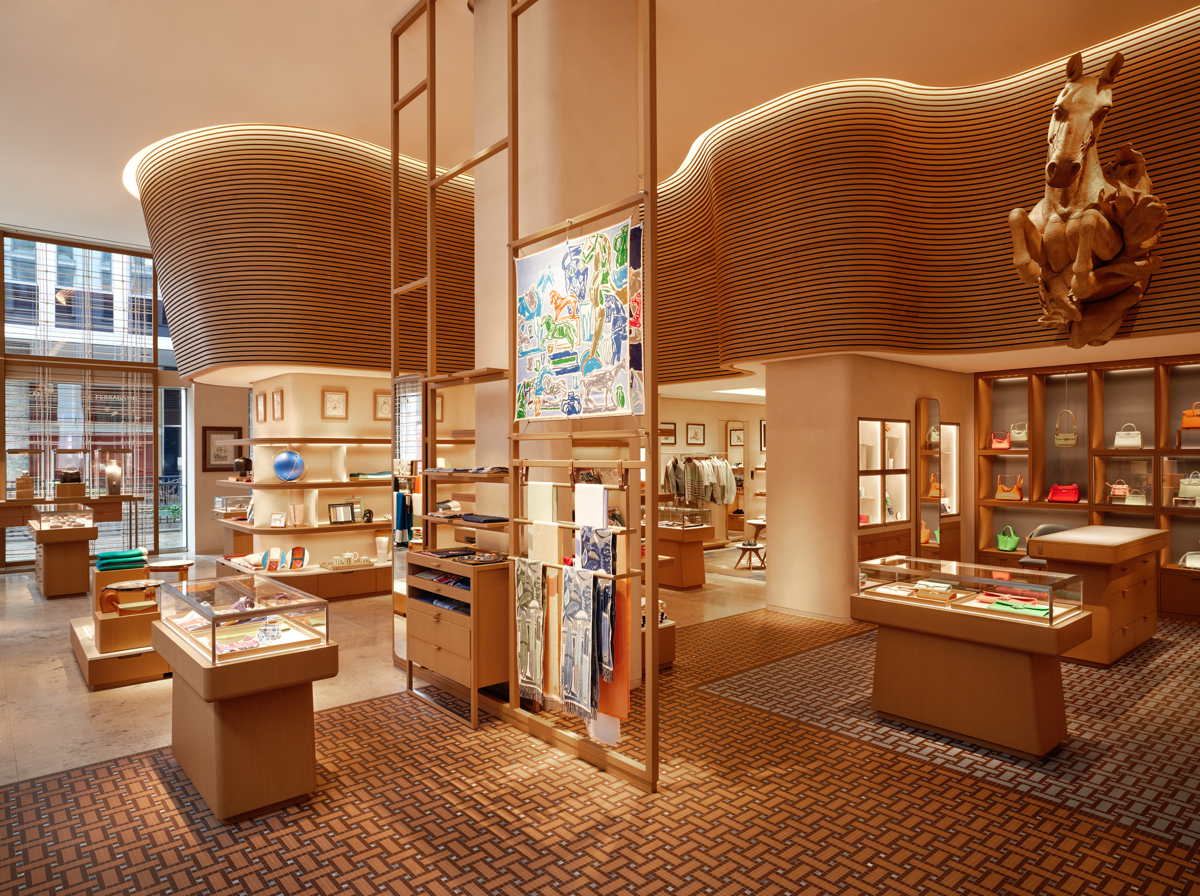
Hermès’ commitment to exclusivity and excellence remains unwavering. In 2020, the house launched its sixteenth métier, Beauty, with the Rouge Hermès collection. New Maisons Hermès continue to open worldwide, including a flagship on Madison Avenue in New York in 2024. As the brand looks to the future, it balances the allure of its storied past with a forward-looking approach to design and craftsmanship.
Why It Matters
In the world of luxury fashion, Hermès represents the zenith of craftsmanship, exclusivity, and enduring elegance. Its unwavering commitment to quality and functionality, combined with a rich heritage spanning nearly 190 years and a knack for innovation, has secured its place as a beacon of luxury. For connoisseurs, Hermès isn’t just a brand; it’s a symbol of the pursuit of perfection, making it a paragon in the world of luxury that continues to inspire and captivate.