Rolls-Royce: Engineering Elegance Since 1904
The Legend Begins
On May 4, 1904, in the Midland Hotel in Manchester, England, an unlikely partnership was forged that would forever alter the course of automotive history. The Hon. Charles Stewart Rolls, an aristocrat with a passion for mechanics and a Cambridge-educated engineer who ran one of Britain’s first car dealerships in London, met Henry Royce, a self-taught engineering genius who had just built his first motor car. Rolls, frustrated that he could only sell foreign imports, was searching for a high-quality British-made vehicle. When Henry Edmunds, a mutual friend and director of Royce Limited, arranged the meeting, the chemistry was immediate. After taking Royce’s 10 H.P. for a drive, Rolls declared he had found “the greatest motor engineer in the world” and agreed on the spot to sell every car Royce could make under the name Rolls-Royce. At a time when automobiles were a novelty and often unreliable, the duo saw a gap in the market for vehicles that would never compromise on quality, reliability, or performance. Their partnership was officially formed on December 23, 1904, and Rolls-Royce Limited was registered on March 15, 1906.
The Founder’s Vision
Charles Rolls, born in 1877 in London’s affluent Berkeley Square, was the third son of Lord and Lady Llangattock. After studying mechanical engineering at Trinity College, Cambridge, where he earned the nickname “Dirty Rolls” for his love of tinkering with engines, he became an accomplished motorist and later a pioneering aviator. Henry Royce, by contrast, came from impoverished origins. Born in 1863, he received minimal formal education but developed an instinctive, intuitive approach to engineering. Having founded an electrical and mechanical business in Manchester in 1884, Royce built his first motor car in 1904 after becoming frustrated with the faults he found in a French Decauville he had purchased. His mantra, “Take the best that exists and make it better. When it does not exist, design it,” became the cornerstone of Rolls-Royce philosophy. Their first breakthrough, the Rolls-Royce 10 H.P., unveiled at the Paris Salon in December 1904, embodied their shared commitment to excellence. Claude Johnson, who joined as Commercial Managing Director and became known as “the hyphen in Rolls-Royce” for his pivotal role, helped shape their ambition to create “the Best Car in the World.”
Rise to Excellence
The journey from an ambitious partnership to a global icon was marked by milestones and challenges that would define the brand. In 1906, Rolls-Royce introduced the 40/50 H.P. model, which was first shown at the Olympia Motor Show in London. The following year, the twelfth chassis produced, number 60551, was painted silver with silver-plated fittings and nicknamed the “Silver Ghost” for its silent running. Autocar magazine declared it “the best car in the world” in 1907, and the name stuck to the entire series. Claude Johnson orchestrated a legendary publicity stunt: driving the Silver Ghost from London to Glasgow 27 times, covering nearly 15,000 miles non-stop without a single breakdown. This feat cemented Rolls-Royce’s reputation for exceptional reliability. Tragically, Charles Rolls died in 1910 in an aviation accident, becoming the first Briton killed in a powered aircraft crash. Henry Royce continued to lead product development until his death in 1933, personally approving every component in every Rolls-Royce. The company faced and overcame World Wars, during which they manufactured legendary aero engines including the Merlin that powered the Supermarine Spitfire. Between 1907 and 1925, 7,874 Silver Ghosts were produced, establishing standards that all competitors strived to equal.
Iconic Creations
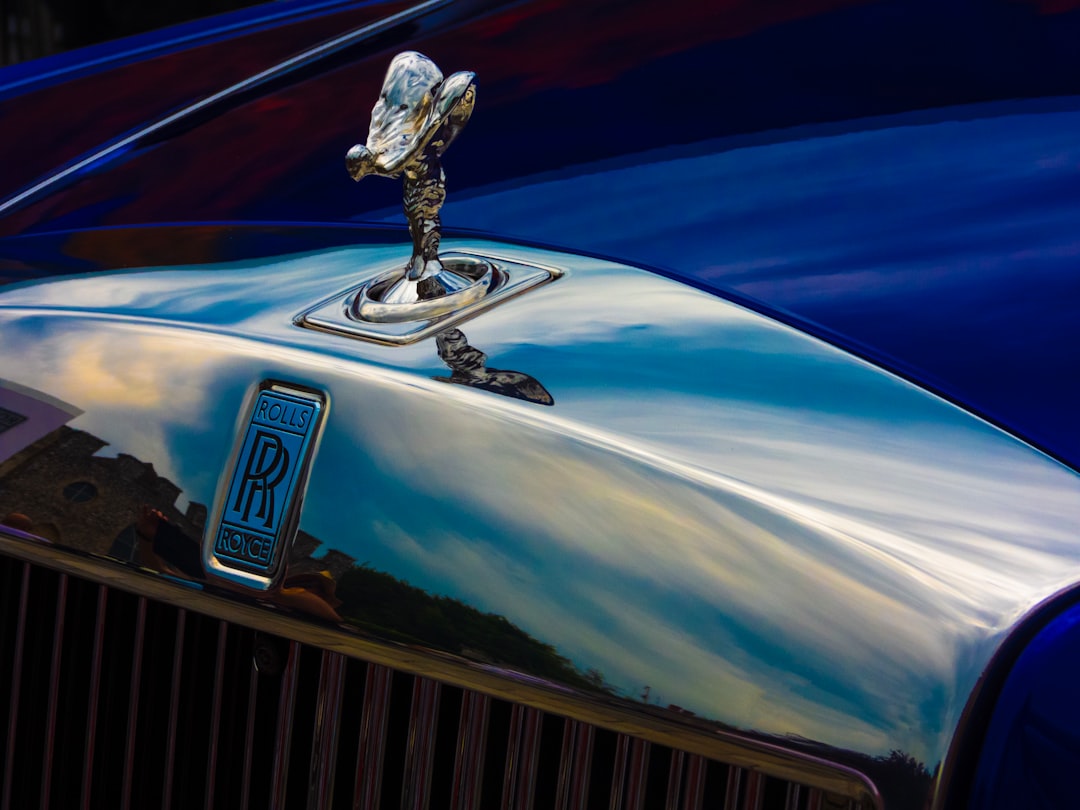
Among the marque’s legendary offerings, the Phantom stands supreme, first introduced in 1925 as the successor to the Silver Ghost and continually reimagined across eight generations to embody modern luxury while retaining its iconic status. The Silver Ghost, with its legendary 15,000-mile trial and exceptional smoothness, established Rolls-Royce’s engineering reputation. The Spirit of Ecstasy mascot, introduced in 1911 and inspired by Eleanor Thornton, has adorned Rolls-Royce radiator grilles ever since, embodying grace and elegance. The Wraith, known for its power and dynamic silhouette, and the Ghost, launched in 2009 and completely redesigned in 2020, continue the tradition. Each model is proof of the brand’s design philosophy: marrying aesthetics with engineering excellence. The custom nature of their vehicles, where clients can customize nearly every aspect from the veneer to the upholstery, ensures that no two Rolls-Royces are the same. As Henry Royce practiced, continuous improvement meant that “almost no two Rolls-Royce motor cars were exactly alike in every detail.”
The Numbers: Empire Today
Rolls-Royce Motor Cars, now headquartered at the 42-acre Goodwood facility in West Sussex since 2003, operates as a wholly owned subsidiary of BMW AG. The Goodwood plant was purpose-built after BMW secured the rights to the Rolls-Royce brand name and logo in 1998 following a complex acquisition saga involving Volkswagen. The company produces between 5,000 and 6,000 handcrafted vehicles annually, deliberately limiting production to maintain exclusivity. In 2024, Rolls-Royce reported its third-highest sales year, with record custom commissions demonstrating clients’ desire for increasingly complex and valuable motor cars. The workforce at Goodwood, numbering over 2,000 skilled craftspeople, dedicate themselves to creating 20 to 25 cars per day. In January 2025, the company announced a £300 million investment to more than double its manufacturing facility, the largest capital injection since Goodwood opened, to accommodate growing demand for custom and coachbuilt commissions.
The Legacy Continues
Under the leadership of CEO Chris Brownridge, who succeeded Torsten Müller-Ötvös on December 1, 2023, Rolls-Royce has embraced modernity while honoring its heritage. Müller-Ötvös, the longest-serving CEO since Claude Johnson, had led the brand for nearly 14 years, during which sales increased sixfold and the average owner age dropped from 56 to 43. The most significant recent innovation is the Spectre, Rolls-Royce’s first all-electric motor car, launched in late 2023. With 577 horsepower, 664 lb-ft of torque, and an estimated range of 260 miles, the Spectre fulfills a prophecy made by Charles Rolls in 1900, when he wrote that electric cars “are perfectly noiseless and clean” and “should become very useful when fixed charging stations can be arranged.” The company has committed to becoming fully electric by 2030. In 2025, the Black Badge Spectre debuted as the most powerful Rolls-Royce ever made, with 650 horsepower. Private Offices in Dubai, Shanghai, Seoul, and New York offer ultra-high-net-worth clients intimate spaces to commission custom creations.
Why It Matters
Rolls-Royce stands as a pillar of excellence in the luxury automotive world, having celebrated its 120th anniversary in 2024. The BBC has called Rolls-Royce “probably one of the most recognised icons in the world,” noting that “the name Rolls-Royce entered the English language as a superlative.” Its enduring appeal lies not just in the unmatched quality of its vehicles but in the brand’s ability to evolve while maintaining its core values of craftsmanship, innovation, and exclusivity. For connoisseurs, owning a Rolls-Royce is not merely about acquiring a car; it’s about participating in a legacy of luxury, where every detail is proof of the founders’ commitment to “strive for perfection in everything you do.” In an ever-changing world, from the Silver Ghost of 1907 to the electric Spectre of 2023, the timeless allure of Rolls-Royce endures, a beacon of luxury for those who seek the extraordinary.