Maserati: A Century of Italian Elegance
The Legend Begins
On December 1, 1914, in a small garage at Via de’ Pepoli in Bologna, Italy, three brothers ignited a spark that would transform into one of the most iconic names in automotive history. Alfieri, Ettore, and Ernesto Maserati, sons of railway worker Rodolfo Maserati and Carolina Losi, founded the Società Anonima Officine Alfieri Maserati. The brothers inherited their passion for mechanics from their father and eldest brother Carlo, a pioneering engineer who had designed single-cylinder engines for bicycles before his tragic death from tuberculosis in 1910 at age 29. Alfieri, just 27 years old at the company’s founding, had previously worked at Isotta Fraschini, where he honed his mechanical expertise. The timing was ambitious yet precarious: within five months of their opening, Italy entered World War I, calling Alfieri and Ettore to the front and leaving young Ernesto, then just 16, to manage the workshop alone.
The Founder’s Vision
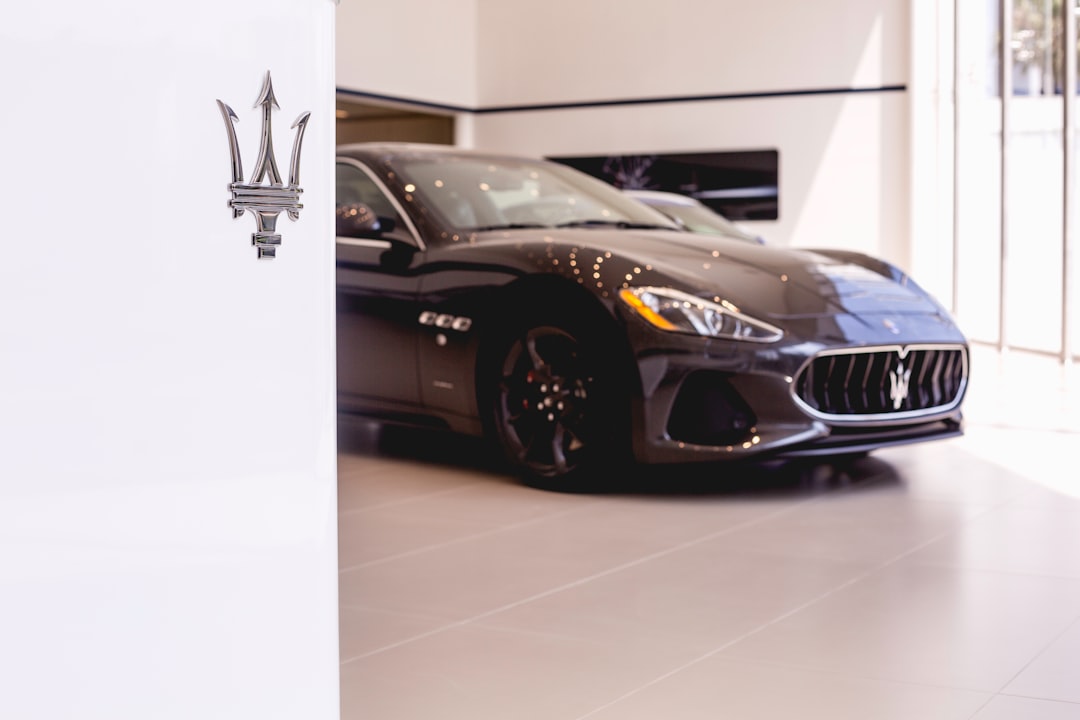
Alfieri Maserati was more than an entrepreneur; he was a craftsman whose genius lay in both engineering and racing. During the war years, he developed a revolutionary spark plug design with mica insulation that provided more consistent engine performance, a patent that would sustain the company financially. Upon returning from the war, Alfieri worked tirelessly with his brothers on their first true creation: the Tipo 26, named for its year of construction. For this momentous debut, Alfieri turned to his brother Mario, the family’s artist who had studied at the prestigious Brera Academy in Milan. Legend holds that Mario wandered through Bologna’s streets seeking inspiration, eventually arriving at the Piazza Maggiore, where the magnificent Fountain of Neptune commanded attention. The god of the sea held his three-pronged spear aloft, and Mario knew instantly he had found the symbol for the Maserati family. On April 25, 1926, at the Targa Florio race in Sicily, the Tipo 26 debuted bearing the now-famous Trident badge. Alfieri himself drove the car to an eighth-place overall finish and a class victory, defeating two Bugattis in the process.
Rise to Excellence
The 1920s and 1930s marked Maserati’s golden era in motorsport. The brothers’ engineering prowess produced increasingly powerful machines, culminating in the V4, which in September 1929 set a world speed record of 246.069 km/h at Cremona, a record that stood until 1937. However, tragedy struck on March 3, 1932, when Alfieri died at age 44 from complications stemming from injuries sustained in a racing accident five years earlier. His brothers persevered, but mounting financial pressures led them in 1937 to sell the company to Adolfo Orsi, a self-made industrialist from Modena who had risen from selling fruit on the streets to becoming the region’s leading businessman. The agreement kept the Maserati brothers as consultants for ten years, and in 1940, Orsi relocated the headquarters to Modena’s Viale Ciro Menotti, where it remains today. Under Orsi’s stewardship, Maserati achieved historic back-to-back victories at the Indianapolis 500 in 1939 and 1940 with driver Wilbur Shaw. The post-war era brought Formula 1, where the legendary 250F became the definitive front-engine Grand Prix racer. In 1957, Juan Manuel Fangio, at 46 years old, drove the 250F to one of motorsport’s most celebrated victories at the Nürburgring, breaking the lap record nine times during an epic comeback drive to clinch his fifth and final World Championship.
Iconic Creations
Maserati’s design philosophy crystallized in the 1960s with a series of groundbreaking models. The Quattroporte, unveiled at the Turin Motor Show on October 30, 1963, created an entirely new category: the luxury sports sedan. Designed by Pietro Frua with a racing-derived V8 engine, it became the fastest four-door production car in the world, capable of 230 km/h. Notable owners included Peter Sellers and Anthony Quinn. Then came the Ghibli, unveiled at the Turin Motor Show in November 1966 and launched in 1967. Named after the hot Saharan wind, it was penned by a young Giorgetto Giugiaro, then working at Ghia, and is considered one of the most beautiful automotive designs of the postwar era. Henry Ford II famously purchased the first one off the boat, paying $19,000, the equivalent of four new Thunderbirds. With its shark-nose profile, pop-up headlights, and Ferrari-rivaling V8 performance, the Ghibli outsold both the Ferrari Daytona and Lamborghini Miura despite commanding a higher price. Between 1967 and 1972, over 1,200 coupes and 128 convertibles were produced.
The Numbers: Empire Today
Maserati has navigated turbulent ownership changes over the decades. After Citroën acquired control in 1968 and later relinquished it, Argentine businessman Alejandro de Tomaso took the reins before Fiat assumed ownership in 1993. The brand flourished under Ferrari’s management from 1997 to 2005, with Ferrari-built engines powering Maserati’s renaissance. Following the 2021 merger of FCA and PSA, Maserati now operates under Stellantis. However, recent years have proven challenging: in 2024, the brand recorded losses of €260 million, with sales plummeting to 11,300 vehicles from 26,600 in 2023, a decline exceeding 50%. First-half 2024 revenues fell to €631 million from €1.31 billion the previous year. The electric Folgore range has struggled to gain traction, with fewer than 150 units registered across Italy, Germany, and France in 2024. Despite these headwinds, Maserati remains headquartered in Modena, with its historic Viale Ciro Menotti plant having produced the MC20 supercar since 2020.
The Legacy Continues
The MC20, launched in September 2020, represents Maserati’s bold step into a new era. Named “Maserati Corse 2020” (Maserati Racing 2020), it is powered by the Nettuno engine, a revolutionary 3.0-liter twin-turbo V6 developed entirely in-house at Modena. Producing 630 horsepower with a specific output of 210 hp/litre, the Nettuno employs Formula 1-derived pre-chamber combustion technology protected by international patents. The MC20 accelerates from 0-100 km/h in 2.88 seconds, reaches a top speed exceeding 326 km/h, and weighs under 1,500 kg, achieving best-in-class power-to-weight ratio. The current lineup also includes the Quattroporte (now in its sixth generation), the Ghibli sedan, the GranTurismo, and the Levante SUV, which debuted at the Geneva Motor Show in March 2016 as Maserati’s first SUV in its then-102-year history. As Stellantis restructures its luxury portfolio, Maserati faces the challenge of returning to profitability while honoring its racing heritage.
Why It Matters
Maserati endures because it represents something irreplaceable in automotive culture: the marriage of Italian artistry with racing pedigree. From that modest garage on Via de’ Pepoli to the hallowed grounds of Modena, from Alfieri’s spark plug patents to Fangio’s legendary Nürburgring drive, from the Ghibli’s sculptural beauty to the MC20’s technological audacity, Maserati has consistently embodied the spirit of passionate, uncompromising craftsmanship. The Trident, drawn by an artist brother inspired by Neptune’s might, still speaks to those who believe an automobile can be more than transportation. It is this belief, tested by financial hardships and ownership changes yet never extinguished, that defines the Maserati legend and ensures its relevance for connoisseurs who value heritage, performance, and la bella figura above all else.