Gulfstream: Sky-High Luxury Since 1958
The legend begins
In 1930, in a converted automobile showroom on Long Island, New York, Leroy “Roy” Grumman and Leon Swirbul founded what would become one of America’s most storied aviation companies. Grumman Aircraft Engineering Company started out in military aviation and became a leading manufacturer of naval aircraft during World War II, producing fighters like the F4F Wildcat and F6F Hellcat. In the post-war boom of the late 1950s, Grumman saw an opening in civilian aviation. In 1957, engineers at the Bethpage, New York facility finished the design for a turboprop aircraft built specifically for business travel. On August 14, 1958, the Gulfstream I took to the skies for its maiden flight, and purpose-built business aviation had begun.
The founder’s vision
Roy Grumman named the aircraft “Gulfstream,” after the ocean current that flows along Florida’s coast, where many Grumman executives vacationed. The Gulfstream I was a twin-turboprop that carried 12 passengers at 350 mph with a range of 2,200 nautical miles. With its pressurized cabin and the reliability inherited from Grumman’s military work, the G-I proved business aircraft could deliver both comfort and performance. Two hundred examples were built between 1958 and 1969, establishing Gulfstream in the emerging corporate aviation market. That success pushed Grumman to develop a jet-powered successor, the Gulfstream II, which first flew in October 1966 and became the first business jet to complete a nonstop transatlantic crossing in May 1968.
Rise to excellence
In 1967, Grumman moved the civilian aircraft division to Savannah, Georgia, where it remains headquartered today. The next big change came in 1978, when entrepreneur Allen Paulson acquired the Gulfstream line and Savannah plant from Grumman for $52 million. Paulson renamed the company Gulfstream American, then Gulfstream Aerospace Corporation in 1982. Under his leadership, Gulfstream introduced the G-III in 1979, with improved range and the distinctive winglets that became a Gulfstream signature. The company changed hands several times. Chrysler acquired it in 1985 for $637 million, before Paulson bought it back in 1989 with private equity firm Forstmann Little. In 1999, General Dynamics acquired Gulfstream for $5.3 billion, providing the resources for further growth.
Iconic creations
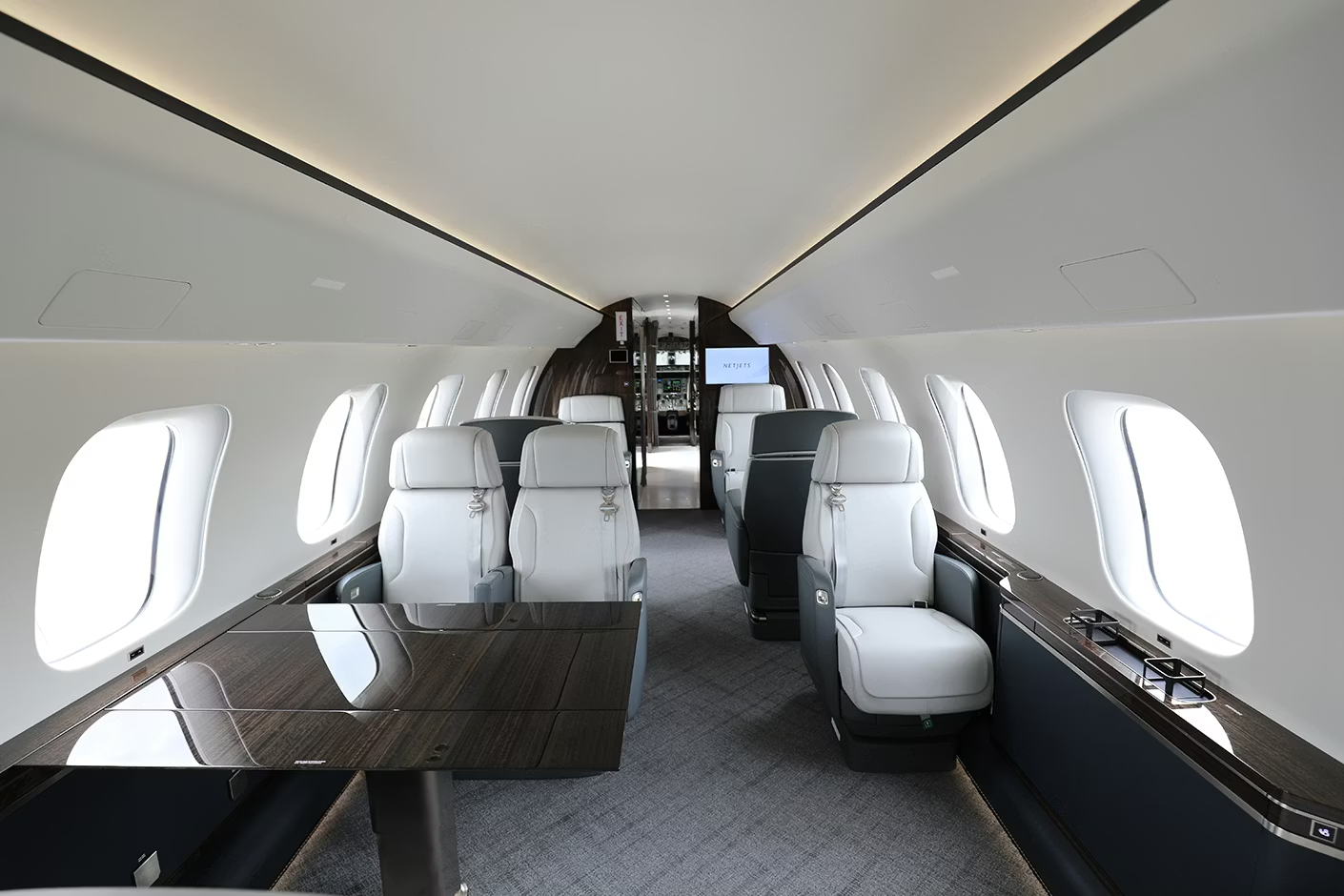
Gulfstream’s history runs through a series of notable aircraft. The Gulfstream IV, introduced in 1987, was the first business jet with an all-glass cockpit. The Gulfstream V, which first flew on November 28, 1995, and entered service in June 1997, was first in the ultra-long-range category with its 6,500 nautical mile capability, earning the Collier Trophy. The G650 was announced in 2008, made its maiden flight in November 2009, and received FAA certification in September 2012. With a top speed of Mach 0.925 and range of 7,000 nautical miles, the G650 became the benchmark for large-cabin business jets, with over 500 delivered before production ended in February 2025. Its clientele includes well-known figures from business and entertainment, drawn by its speed, range, and cabin comfort.
The numbers: empire today
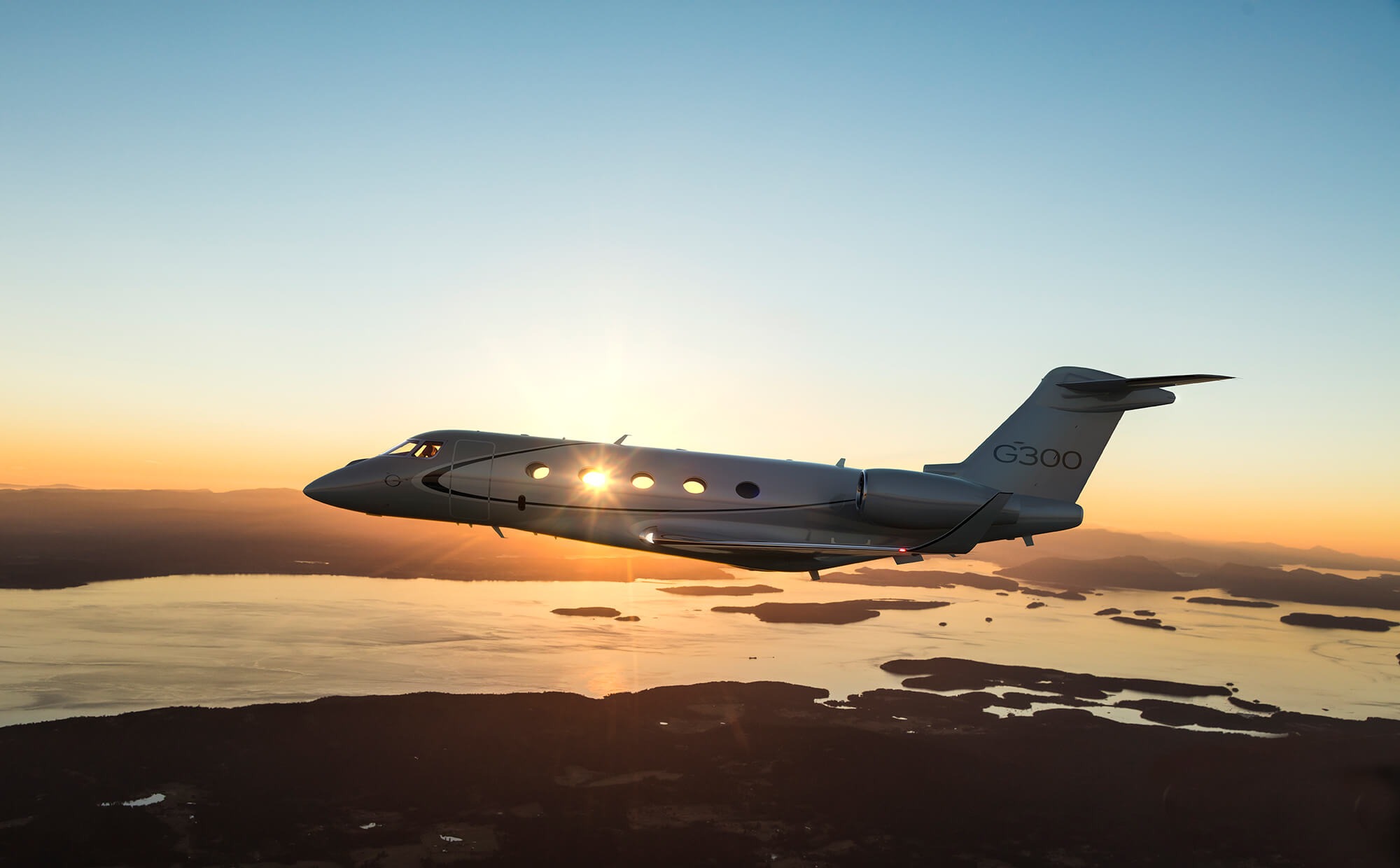
Today Gulfstream Aerospace is the world’s leading manufacturer of large-cabin, long-range business jets, a wholly owned subsidiary of General Dynamics. The company employs more than 20,000 people worldwide, with major facilities in Savannah and Brunswick, Georgia, along with service centers spanning Dallas, Las Vegas, West Palm Beach, Appleton, Long Beach, Westfield, and London-Luton. Since 1958, Gulfstream has produced more than 3,300 aircraft serving customers in over 70 countries. The current fleet includes the G280, G400, G500, G600, G650ER, G700, and the newest G800. The flagship G700, certified by the FAA in March 2024 and in customer deliveries since April 2024, has a 7,750 nautical mile range at Mach 0.85 and leads the industry in cabin space. The G800, certified in April 2025, now holds the title of world’s longest-range business jet at 8,200 nautical miles.
The legacy continues
Under President Mark Burns, a Savannah native who joined Gulfstream in 1983 and was named President in July 2015, the company has kept developing new aircraft. Burns, who also serves as Vice President of parent company General Dynamics, oversaw the development and certification of the G500, G600, G700, and G800. The company promotes Sustainable Aviation Fuel (SAF) and researches reduced emissions. Gulfstream’s PlaneView avionics suite and Enhanced Vision System remain industry standards, and service centers worldwide provide around-the-clock support.
Why it matters
Gulfstream Aerospace holds a distinct place among luxury brands. From Roy Grumman’s work in the 1950s through Allen Paulson’s ownership to today’s General Dynamics backing, the company has held its focus on performance, innovation, and craftsmanship. For business leaders, heads of state, and other owners, a Gulfstream is both transportation and a tool that changes how they reach the rest of the world: over 3,300 aircraft built since 1958, and a current flagship that flies 8,200 nautical miles without stopping.