Bulgari: A Roman Tale of Gems and Jewels
The Legend Begins
In the heart of Rome, the year 1884 witnessed the birth of a legend that would redefine luxury jewelry: Bulgari. Founded by Sotirios Voulgaris, a Greek silversmith with dreams larger than life, the brand’s inception was not just the opening of a store but the beginning of a new era in jewelry. Voulgaris, who hailed from the village of Kalarrytes in the Epirus region of Greece, brought with him a vision that combined his rich Hellenic heritage with the burgeoning allure of Italian craftsmanship. Opening his first boutique on Via Sistina, Voulgaris later established the flagship store at Via dei Condotti in 1905, together with his two sons, Constantino and Giorgio. Amidst a period of cultural renaissance, Bulgari emerged as a beacon of innovation, blending the classical with the contemporary, in a time when Rome was asserting its status as a hub of modern aristocracy and discerning elegance.
The Founder’s Vision
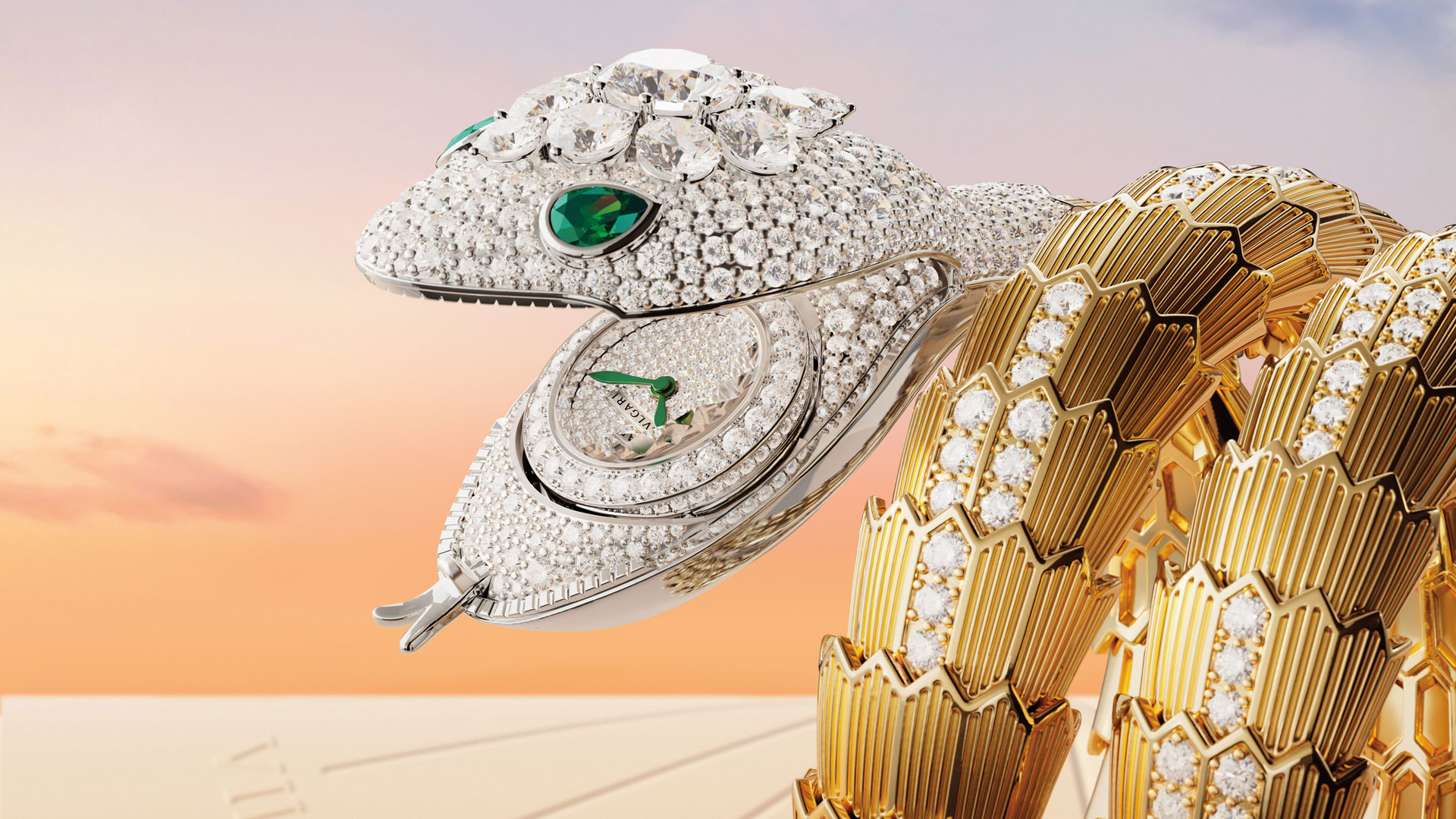
Sotirios Voulgaris was not just a craftsman; he was a visionary who saw beauty in the melding of cultures. His journey from a small Greek village to the heart of Rome was fueled by an unwavering determination to create something enduring. Voulgaris’s early decision to infuse his Greek heritage with Italian styles set Bulgari apart, offering a unique blend that captivated an elite clientele. The first breakthrough came with the introduction of the Serpenti bracelet-watch in 1948, a piece that not only showcased Bulgari’s innovative spirit but also cemented its place in the pantheon of luxury brands. Created using the Tubogas technique, this flexible gold bracelet-watch featured a square dial nestled within a head that gracefully coiled around the wrist. The brand’s philosophy, deeply rooted in the founder’s belief in quality, innovation, and distinctive design, continues to guide Bulgari, making it a timeless emblem of luxury.
Rise to Excellence
The journey from a modest workshop to a global icon was marked by relentless pursuit of excellence and a flair for the extraordinary. Sotirios Voulgaris passed away in 1932, leaving his business to his two sons, Giorgio and Constantino. In the 1950s and 1960s, Bulgari became synonymous with the glamour of the Dolce Vita era, adorning stars like Elizabeth Taylor and Sophia Loren. This period saw the brand redefine jewelry design, moving away from the rigid forms of the past to embrace a more fluid, sculptural aesthetic. The opening of its first international stores in the 1970s in New York, Paris, Geneva and Monte Carlo marked Bulgari’s expansion beyond Italian borders, setting the stage for its global presence. The 1980s and 1990s witnessed further expansion, establishing Bulgari as a global luxury brand. Overcoming challenges like economic downturns and changing market dynamics, Bulgari’s reputation for unparalleled quality and innovative design only grew stronger.
Iconic Creations
Bulgari’s legacy is also the story of its iconic creations that have enchanted the world. The Serpenti collection, inspired by Greek and Roman mythology, showcases the brand’s mastery in blending cultural heritage with modern design. The B.zero1 ring, introduced in 1999, defied traditional jewelry-making with its spiral design inspired by the Colosseum. Then there’s the Monete collection, which ingeniously incorporates ancient coins into jewelry, connecting past and present. Each piece is a testament to Bulgari’s commitment to craftsmanship, innovation, and an unmistakable aesthetic that has captivated royalty, celebrities, and jewelry connoisseurs alike.
The Numbers: Empire Today
Today, Bulgari stands as a titan in the luxury jewelry industry, with a presence in approximately 300 stores across the globe. Employing thousands of artisans and professionals, the brand continues to expand its empire, further solidifying its status in key luxury markets. Since becoming a part of the LVMH group in 2011, following an acquisition valued at €4.3 billion, Bulgari has leveraged the conglomerate’s resources to further enhance its global reach and innovation capabilities. In January 2017, Bulgari inaugurated Europe’s largest jewelry manufacturing facility in Valenza, Italy, and in 2025 expanded it to become the world’s largest jewelry factory working with precious materials, covering 33,000 square meters.
The Legacy Continues
Under the leadership of CEO Jean-Christophe Babin, who took the helm in 2013, Bulgari has entered a new era of innovation and sustainability. In 2025, Babin was also appointed CEO of LVMH Watches, overseeing Hublot, Zenith, and TAG Heuer while remaining at the helm of Bulgari. The brand’s recent ventures into eco-friendly packaging and responsible sourcing are testament to its commitment to sustainability. Moreover, Bulgari continues to push the boundaries of design and craftsmanship under the creative direction of Lucia Silvestri, who has been with the brand for over four decades and became Jewelry Creative Director in 2013. The future of Bulgari is a blend of its rich heritage with a forward-looking approach, ensuring that the brand remains at the forefront of the luxury jewelry industry.
Why It Matters
Bulgari’s enduring appeal lies not just in its exquisite creations but in what it represents: a harmonious blend of art, history, and craftsmanship. To connoisseurs of luxury, Bulgari is more than a brand; it’s a piece of cultural heritage that carries the legacy of Rome and the artistry of its founders. In a world of fleeting trends, Bulgari stands out as a beacon of timeless elegance and enduring value, a testament to the vision of Sotirios Voulgaris and the generations that have carried his dream into the future.