Krug Champagne: The Art of Perfection Since 1843
The Legend Begins
In the year 1843, within the historic city of Reims, a visionary named Joseph Krug founded a champagne house that would redefine the essence of luxury in sparkling wine. Born Johann-Joseph Krug in 1800, the son of a butcher in Mainz on the Rhine, he had dispensed with his first name and left his hometown in 1824. By 1834 he was in Paris, and soon joined Champagne Jacquesson in Châlons-sur-Marne, where he spent eight years learning about composition and taste. In 1841 he married Emma-Anne Jaunay, the daughter of a French hotelier based in London. The following year their son Paul was born. After a year of negotiations, Krug et Cie was founded in 1843 with sleeping partner Hyppolite de Vivès. At a time when the champagne industry was at the mercy of variable seasons, Krug saw a gap for a champagne that could offer excellence year after year, regardless of annual climatic changes. With his profound understanding of champagne and a relentless pursuit of quality, Joseph Krug set up his house with a clear objective: to create a champagne of unparalleled quality, every year.
The Founder’s Vision
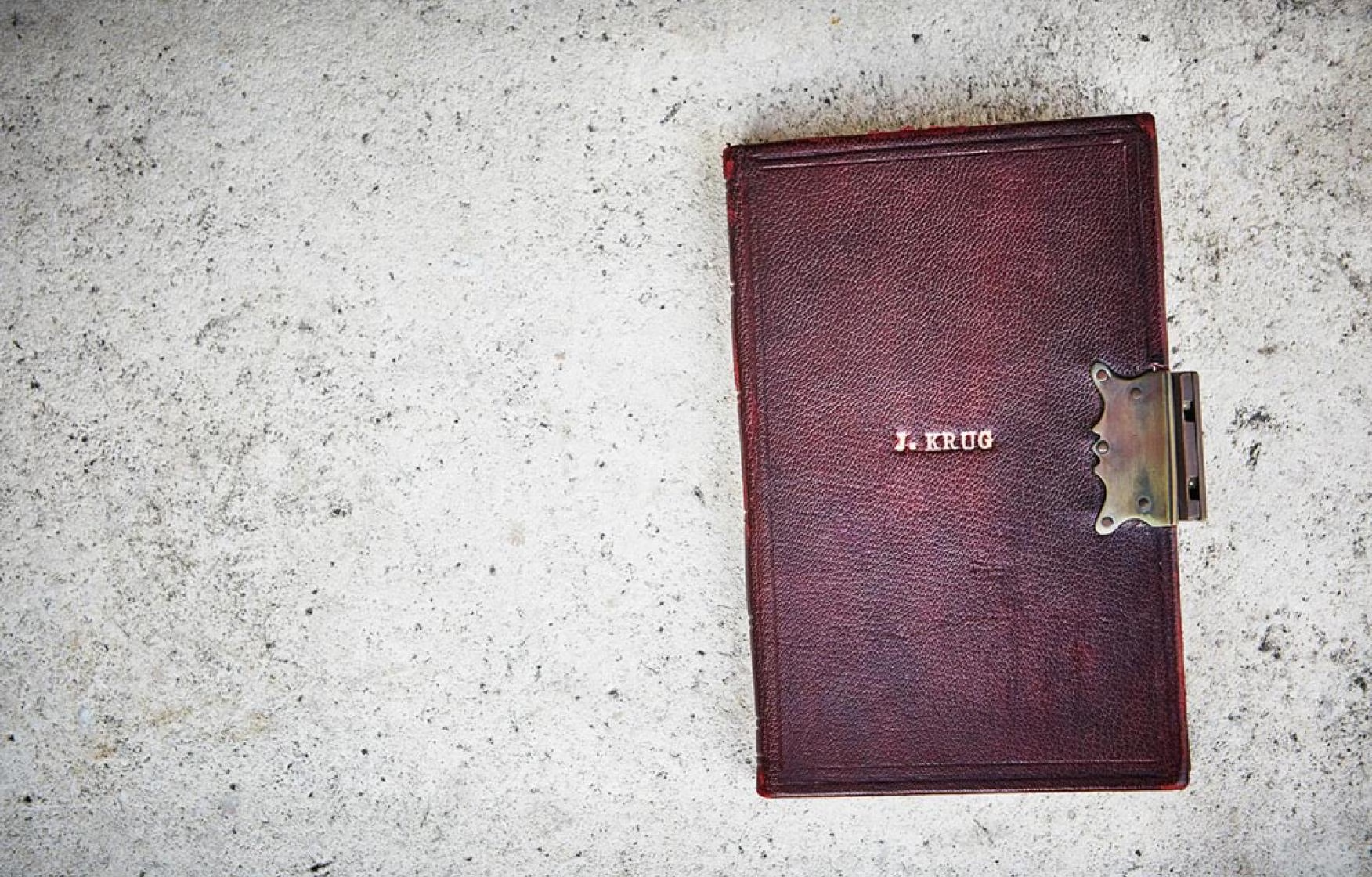
Joseph Krug was no stranger to the complexities of winemaking. His journey from Mainz, Germany, to Reims was fueled by a singular passion: to create the perfect champagne. What drove him was a conviction that the true essence of champagne could only be captured through meticulous craftsmanship and a visionary blend of grapes from different years. In 1848, with his son still too young to take over, Joseph began documenting his founding principles in a deep cherry-red notebook. Krug’s early decision to establish a vast library of reserve wines was revolutionary. This allowed him the freedom to blend across years, creating a consistent taste profile that would become Krug’s signature. The first edition of Krug Grande Cuvée was born from this philosophy, a testament to Krug’s belief that every bottle of champagne should offer a taste of the extraordinary. This philosophy of creating only prestige cuvées guides the brand to this day, setting Krug apart in the world of sparkling wines.
Rise to Excellence
The journey from a modest workshop in Reims to a globally recognized icon of luxury champagne was marked by relentless dedication to quality and innovation. Joseph Krug died in 1866 and was succeeded by his son Paul, who had been trained by his father for the business. Under Paul’s supervision, the House was established as a grande marque. By the 1880s, the prestige of Krug was acknowledged in the United Kingdom, then the primary overseas market for Champagne. In 1866, the House moved into the premises in Rue Coquebert, in Reims, that it still occupies today. After Paul’s death in 1910, he was succeeded by his son Joseph Krug II. The 1926 and 1928 vintages created during this era have been considered by critics to be amongst the greatest Champagnes ever made. In the 1970s, brothers Henri and Rémi Krug modernized production, acquired the famous Clos du Mesnil vineyard, launched Krug Rosé in 1983, and purchased Clos d’Ambonnay in 1991. In January 1999, Krug was acquired by LVMH Moët Hennessy Louis Vuitton.
Iconic Creations
Krug’s signature is its Grande Cuvée, an exquisite blend of over 120 wines from more than 10 different vintages. This masterful creation offers complexity, fullness, and elegance, encapsulating the brand’s pursuit of perfection. More than 20 years of careful craftsmanship are necessary to create each bottle, including a stay of at least six years in the cellars. Since 2016, each release has been numbered as a distinct “Édition,” making them collectible and highlighting their individual character. Another notable creation, the Krug Vintage, stands as a testament to the character of individual years that Joseph Krug so revered. Each vintage tells a unique story, a snapshot of a particular year’s climatic idiosyncrasies. The Krug Clos du Mesnil, a Blanc de Blancs from a single 1.84-hectare walled vineyard first bottled separately in 1979, and the Krug Clos d’Ambonnay, a Blanc de Noirs from a tiny 0.68-hectare plot, represent the pinnacle of single-vineyard champagne. These creations are instantly recognizable not just for their taste but for their presentation, each bottle carrying the Krug legacy forward.
The Numbers: Empire Today
Krug has meticulously guarded its production details, focusing on quality over quantity. With only around 42,000 cases produced for their vintage Champagne, the competition for allocations is incredibly fierce. The brand continues to be part of the prestigious LVMH Moët Hennessy Louis Vuitton SE since its acquisition in 1999, a testament to its luxury status and enduring appeal. Henri and Rémi Krug stepped down from day-to-day responsibilities in 2007, while remaining on the tasting committee. With its headquarters still in Reims at Rue Coquebert, the brand has maintained selective distribution, available in over 50 countries but through limited and carefully chosen outlets. In 2024, Krug completed Joseph, its new state-of-the-art sustainable winery in the village of Ambonnay, awarded exceptional HQE certification, marking a new era for the House.
The Legacy Continues
Today, Krug stands as a beacon of luxury in the champagne industry, under the guidance of Olivier Krug, the sixth generation of the founding family, who became Director of Krug in 2009. The cellar master Julie Cavil leads the winemaking team, continuing the tradition of meticulous tasting and blending. The brand’s commitment to innovation is evident in its recent ventures into experiential endeavors, including the Krug Single Ingredient initiative founded in 2015, which invites chefs worldwide to craft recipes around each Krug Grande Cuvée edition. Sustainability initiatives have also become a key focus, with the new Joseph winery representing the House’s commitment to environmental responsibility. Maintaining exclusivity while continuously enchanting a new generation of champagne lovers is the balance Krug masterfully achieves. The next chapter looks promising, with a continued dedication to creating champagnes that offer a transcendent experience.
Why It Matters
In the world of luxury champagne, Krug represents more than just a bottle of sparkling wine; it embodies a relentless pursuit of perfection. To connoisseurs, Krug is not just a drink but an experience, a philosophy captured in every sip that speaks to the dedication of its creators. Its enduring legacy is a testament to the vision of its founder and the six generations of craftsmanship that have made it a symbol of luxury and refinement. Krug’s place in luxury culture endures because it represents the ultimate in champagne making, a beacon of excellence that continues to shine brightly in the world of fine wines.