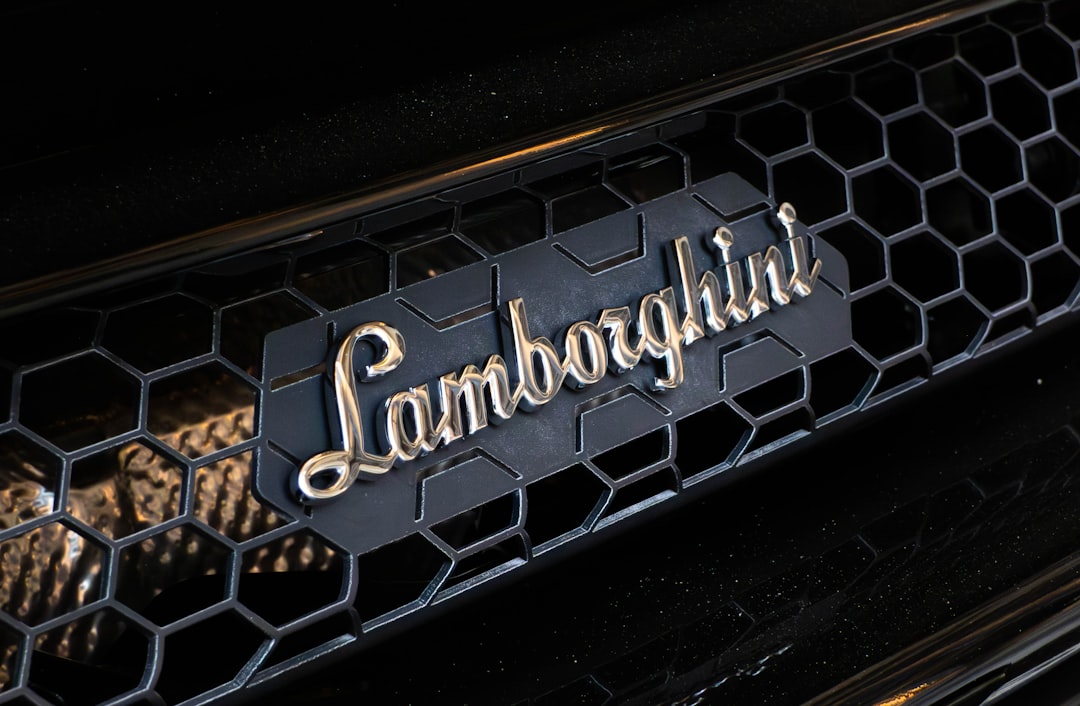
Lamborghini: The Raging Bull’s Roar
The Legend Begins
In the heart of Italy’s motoring landscape, 1963 marked the birth of a legend. On May 7th, in Sant’Agata Bolognese, a visionary named Ferruccio Lamborghini founded Automobili Lamborghini S.p.A., embarking on a journey to redefine the concept of luxury sports cars. Coming from a successful background in tractor manufacturing with Lamborghini Trattori, Ferruccio’s leap into automotive excellence was fueled by a personal desire for more refined, powerful, and comfortable high-performance cars than those on the market. The famous story goes that after complaining to Enzo Ferrari about clutch issues in his Ferrari 250 GT, discovering it was the same component used in his tractors sold at a fraction of the price, Ferrari dismissively told him to stick to building tractors. This insult sparked a determination that would create one of the most iconic automotive brands in history.
The Founder’s Vision
Ferruccio Lamborghini, born in 1916 to grape farmers in Renazzo, a hamlet of Cento in the province of Ferrara, was an innate mechanic and visionary entrepreneur. After World War II, he began converting surplus military vehicles into agricultural machinery, founding Lamborghini Trattori in 1948. His journey from building tractors to creating some of the world’s most coveted cars was driven by a quest for perfection and a keen eye for detail. Ferruccio’s philosophy was simple yet profound: create the ultimate grand touring machine, combining performance with luxury in a way no one had dared before. His first breakthrough, the Lamborghini 350 GT, debuted in 1964 following the 350 GTV prototype shown at the 1963 Turin Motor Show. Lamborghini’s philosophy of pushing boundaries and striving for perfection still guides the brand today, a testament to Ferruccio’s enduring legacy.
Rise to Excellence
The path from an ambitious startup to a global icon was paved with innovation, challenges, and milestones. In 1966, the Lamborghini Miura revolutionized the automotive world as the first production car with a rear mid-engine layout, effectively creating the supercar template that persists today. It was the fastest production car in the world at launch and the first vehicle to be called a “supercar.” The 1970s brought the iconic Countach in 1974, the first production car to feature scissor doors, which became synonymous with the brand. Despite financial challenges that led to Ferruccio selling his stake in 1974, the company persevered. The Diablo launched in 1990 as the fastest production car in the world, capable of exceeding 325 km/h. Following ownership changes through Chrysler and Malaysian investors, Audi AG acquired Lamborghini on July 10, 1998, for approximately $110 million, ushering in a new era of stability and investment. The Murciélago (2001) and Gallardo (2003) marked the brand’s resurgence, with the Gallardo becoming Lamborghini’s best-selling model ever at 14,022 units. The introduction of the Aventador in 2011 and the Huracán in 2014 continued the brand’s commitment to innovation, performance, and design excellence.
Iconic Creations
Lamborghini’s portfolio of creations is as varied as it is iconic. The Miura, introduced in 1966, set the stage for future super sports cars with its revolutionary mid-engine design and became a status symbol for the elite. The Countach, unveiled in 1974, with its angular Marcello Gandini design and signature scissor doors, became synonymous with Lamborghini’s daring approach to automotive design and defined the poster-car aesthetic of the 1980s. The LM002, produced from 1986 to 1993, was Lamborghini’s first SUV, nicknamed the “Rambo Lambo,” featuring a Countach V12 engine in an off-road body. The Diablo, launched in 1990, pushed the boundaries of speed, becoming one of the fastest cars in the world. The Aventador, with its naturally aspirated V12 engine producing over 700 horsepower and striking aesthetics, represented the pinnacle of Lamborghini’s engineering until its 2022 discontinuation. Each model is a testament to Lamborghini’s commitment to craftsmanship, innovation, and performance, making them instantly recognizable and highly coveted by collectors and enthusiasts worldwide.
The Numbers: Empire Today
Today, Lamborghini stands as a titan in the luxury automotive sector with unprecedented financial success. In 2024, the brand achieved record-breaking results: net revenues of €3.09 billion (a 16.2% increase over 2023), operating profit of €835 million with a remarkable 27% operating margin, and 10,687 vehicles delivered globally, marking the second consecutive year above 10,000 units. The company employs approximately 3,000 people, having added over 1,000 employees in the last two years alone. Lamborghini’s global presence spans 186 dealers across 56 markets, with the Americas, EMEA, and Asia-Pacific regions each contributing significantly to sales. As a wholly owned subsidiary of Audi AG within the Volkswagen Group, Lamborghini maintains its unique brand identity while benefiting from corporate resources and technological sharing. The company’s headquarters and sole production facility remains in Sant’Agata Bolognese, now expanded to over 160,000 square meters.
The Legacy Continues
Under the leadership of CEO Stephan Winkelmann, who returned to the helm on December 1, 2020, Lamborghini has completed a historic transformation: the entire lineup is now electrified. The Revuelto (2023), successor to the Aventador, combines a 6.5-liter V12 with three electric motors for 1,001 horsepower, representing the first “HPEV” (High Performance Electrified Vehicle) in company history. The Temerario, unveiled in August 2024 as the Huracán successor, introduces an all-new twin-turbocharged 4.0-liter V8 capable of reaching 10,000 rpm, paired with hybrid technology for 920 combined horsepower. The Urus SE brings plug-in hybrid technology to Lamborghini’s Super SUV with 800 horsepower and over 60 km of electric range. Looking ahead, the Lanzador concept previews a potential fourth model line expected around 2029, though Lamborghini is evaluating whether it will be fully electric or plug-in hybrid given evolving market conditions.
Why It Matters
Lamborghini’s enduring appeal in luxury culture lies in its relentless pursuit of perfection, innovation, and breaking norms. With its “Direzione Cor Tauri” sustainability strategy targeting 80% CO2 reduction by 2030 and a carbon-neutral production facility since 2015, the brand proves that environmental responsibility and extreme performance can coexist. Lamborghini represents more than just a car manufacturer; it is a symbol of ambition, excellence, and the relentless pursuit of one’s dreams. From Ferruccio’s defiant response to Enzo Ferrari to today’s hybrid hypercars, Lamborghini continues to captivate the imagination of connoisseurs worldwide, not merely for its performance and aesthetics but for the spirit of innovation and audacity it embodies.