Bulgari Hotels: Crafting Luxury Destinations
The Legend Begins
In February 2001, at a news conference in London, two powerhouses of their respective industries announced a partnership that would redefine ultra-luxury hospitality. Marriott International, through its Ritz-Carlton Luxury Group, joined forces with Bulgari SpA, the legendary Roman jeweler founded in 1884 by Greek silversmith Sotirios Voulgaris. The joint venture would launch Bvlgari Hotels & Resorts, a brand designed to translate the meticulous craftsmanship and contemporary Italian elegance of Bulgari’s jewelry into extraordinary hospitality experiences.
The partners committed up to $140 million in equity and subordinated loans over seven years, targeting up to seven initial properties in prime locations worldwide. J.W. Marriott, Jr., then chairman and CEO of Marriott International, declared it a demonstration of their “continuing commitment to growth in the approximately $30 billion worldwide luxury hospitality industry.” Three years later, in 2004, the first Bulgari Hotel opened in Milan, just blocks from the brand’s flagship Via Montenapoleone boutique, marking the beginning of what Bulgari executives would describe as “the jewellers of hospitality.”
The Founder’s Vision
The vision behind Bulgari Hotels was shaped by Silvio Ursini, who joined Bulgari in 1989 as group marketing director when the company had just 10 stores. Raised in Naples and Switzerland, educated at Georgetown University, Ursini had previously worked at Procter & Gamble and in advertising. By 2002, he was named to lead the hotel division, becoming Group Executive Vice President of Bulgari Hotels & Resorts, a position he holds to this day.
“The whole idea from the very beginning was not to treat it as a business, because if it were a business, we would have 100 hotels by now,” Ursini has explained. “It was, and still is, a focused exercise in creativity and innovation, an experimental adventure.” The strategy called for intimate properties, ranging from 59 villas (as in Bali) to 120 suites and villas (as in Dubai), allowing for highly personalized service and sophisticated individual guests rather than large groups.
From the start, all properties would be designed by a single architectural firm: Milan-based Antonio Citterio Patricia Viel (ACPV), which Ursini calls “the ultimate example of Italian craftsmanship.” Unlike conventional hotel designers, ACPV approaches each property using luxury residential design principles, custom furniture, and materials like marble, silk, and eucalyptus that evoke “our opulent jeweler roots.”
Rise to Excellence
From the Milan opening in 2004, Bulgari Hotels expanded with deliberate patience. The Bulgari Resort Bali followed in 2006, a clifftop sanctuary of 59 villas blending Italian design with traditional Balinese construction techniques. London came in 2012, instantly becoming the city’s most expensive hotel, with a penthouse apartment selling for $157 million. Designed by ACPV and built with Portland stone, the 85-room property set a new standard for ultra-luxury in Knightsbridge.
A pivotal transformation came in 2011 when LVMH Moët Hennessy Louis Vuitton acquired Bulgari for €3.7 billion, one of the French luxury conglomerate’s largest acquisitions. Under LVMH ownership, expansion continued thoughtfully: Beijing and Dubai both opened in 2017, Shanghai in 2018, Paris in 2021, Tokyo in April 2023, and Rome in September 2023. Each opening was treated as the unveiling of a new jewel in the collection.
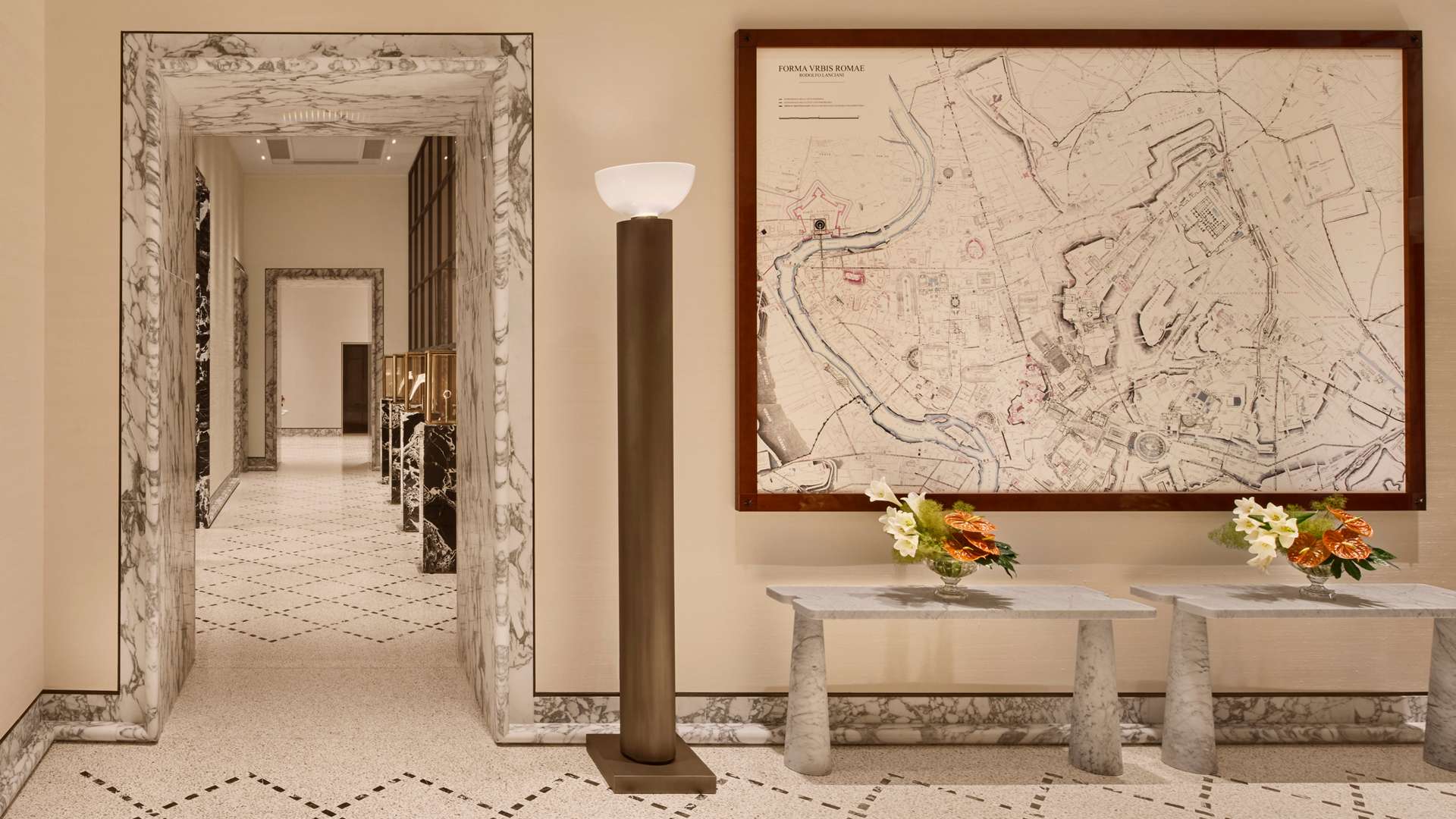
“It has taken us 22 years to open eight hotels,” Ursini noted at the Tokyo opening. “We’re not in a rush.” The Rome opening held particular significance, bringing Bulgari back to its spiritual home, in Piazza Augusto Imperatore, near Via Sistina where Sotirios Bulgari opened his first shop 140 years earlier.
Iconic Creations
Each Bulgari Hotel is conceived as a precious object, with ACPV creating interiors strongly rooted in local traditions while maintaining the brand’s signature contemporary Italian glamour. The design philosophy avoids hotel clichés: no hotel furniture, no hotel details, but rather luxury residential pieces including the “amazingly comfortable, heavy” Maxalto leather armchairs that appear throughout the collection.
The culinary experience is anchored by Michelin-starred Italian chef Niko Romito, who operates Il Ristorante at nearly every Bulgari property. “With the growth of our collection, it has become imperative to offer a consistent experience to our guests also in the culinary field,” Ursini explains. “Niko and us share the same vision of luxury.” Tokyo also features Sushi Hōseki, demonstrating how each property infuses local culture within the Bulgari framework.
The Bulgari Spa at each property offers treatments that blend Italian wellness traditions with local healing practices, while signature suites like the Serpenti Suite pay homage to Bulgari’s most iconic jewelry motifs. Tokyo’s 400-square-meter Bulgari Suite crowns a 45-story skyscraper with views to Mount Fuji.
The Numbers: Empire Today
As of January 2026, Bulgari Hotels & Resorts operates nine properties worldwide: Milan (2004), Bali (2006), London (2012), Beijing (2017), Dubai (2017), Shanghai (2018), Paris (2021), Tokyo (2023), and Rome (2023). The collection maintains an unusual structure: none of the hotels are owned by Bulgari or LVMH. Local real estate partners own the assets, Marriott’s luxury division provides management, and Bulgari licenses the brand while maintaining strict design and operational standards.
The upcoming pipeline includes Ranfushi in the Maldives (2026), Bodrum in Turkey (2027), Miami Beach (2028), Cave Cay in the Bahamas (2029), and Abu Dhabi (2030). “We want maybe 15 hotels maximum down the road,” Ursini has stated. This deliberate scarcity stands in contrast to competitors: Aman has 34 properties, Rosewood 41, Four Seasons over 126. Notably, Bulgari Hotels do not participate in Marriott’s Bonvoy loyalty program, maintaining complete separation from co-branding.
Bvlgari Hotel Tokyo was ranked No. 15 in The World’s 50 Best Hotels 2025, the highest-ranked hotel in Japan, while Bvlgari Hotel Roma debuted at No. 22 on the same list.
The Legacy Continues
Jean-Christophe Babin has served as CEO of Bulgari since 2013, having previously led TAG Heuer for 12 years. In late 2025, Laura Burdese was named the new CEO of Bulgari, with Babin continuing as Chairman of the Bulgari board and CEO of the Bulgari Hotels division. He also now heads LVMH’s entire Watches division, overseeing Hublot, Zenith, and TAG Heuer.
Silvio Ursini continues to guide the hotel division with the same philosophy established two decades ago. Recent initiatives focus on sustainability, with properties like London featuring rainwater recycling, green roofs, and eco-friendly construction practices. Each hotel continues to serve as a cultural hub, hosting exhibitions, high jewelry presentations, and experiences that connect guests with Bulgari’s Roman heritage.
“We don’t do co-branding,” Ursini emphasizes. “From the very beginning of the joint venture, which is still very healthy and prosperous, it has never, ever been a co-branding exercise.”
Why It Matters
Bulgari Hotels & Resorts represents perhaps the most successful diversification of a luxury brand into hospitality. While fashion houses have struggled (Armani Hotels with just two properties, Versace hotels that changed hands), Bulgari has proven that the translation of jewelry-making excellence into hotel design can create genuine value. The brand attracts repeat guest rates of 50-60% at properties like Milan and London, with clientele including celebrities like Anne Hathaway who appreciate the exclusivity. In a world where luxury hospitality brands race to scale, Bulgari’s patience, maintaining that 15-hotel ceiling, ensures each property remains what it was always meant to be: a rare and precious jewel.