Ferrari: The Prancing Horse’s Legacy
The legend begins
In Modena, Italy, Enzo Ferrari turned a lifelong obsession with engines and speed into a car company. He founded Scuderia Ferrari as a racing team in 1929, then created Auto Avio Costruzioni in 1939 after parting ways with Alfa Romeo. A non-compete agreement kept his own name off his automobiles until 1947. On 12 March 1947, Enzo Ferrari officially founded Ferrari S.p.A. in Maranello, where the company’s headquarters remain today, and Ferrari marks that date as the birth of the brand. The industry at the time was focused on mass production and utility. Ferrari went the other way, building for buyers who wanted performance and exclusivity. The workshop in Maranello was the starting point for a marque built around racing and high-end road cars.
The founder’s vision
Enzo Ferrari’s own racing career was overshadowed by his skills as a team manager and, later, an entrepreneur. A deep passion for motorsport and a clear sense of what a sports car should be shaped his early decisions. He chose to focus on the quality and performance of a select few cars rather than how many he could build, and that “quality over quantity” philosophy still guides the brand. The first breakthrough was the 125 S, the first car to bear the Ferrari name, which debuted at the Piacenza circuit on 11 May 1947. Powered by a 1.5-litre V12 designed by Gioacchino Colombo, the 125 S won its first race two weeks later at the Rome Grand Prix on 25 May 1947, driven by Franco Cortese. The Colombo V12 went on to power Ferrari road and race cars, in displacements up to 4.8 litres, for more than 40 years.
Rise to excellence
Ferrari rose quickly to the top of automotive luxury and motorsport. The company raced under the Scuderia Ferrari name in Formula One from 1950, when the F1 World Drivers’ Championship began, and remains the only team to have competed in every season since. The 1950s and 60s brought wins in the world’s most prestigious races, including the 24 Hours of Le Mans (six consecutive wins from 1960 to 1965) and multiple Formula One championships. Milestones such as the Ferrari 250 GTO in the 1960s, now regarded as one of the greatest sports cars of all time, and the 365 GTB/4 “Daytona” in 1968, built on the company’s standing. In 1969, Fiat acquired a 50% stake in Ferrari, providing capital for expansion while Enzo kept creative control. The reputation rests on racing success, engineering, and vehicles that sit at the top of automotive performance.
Iconic creations
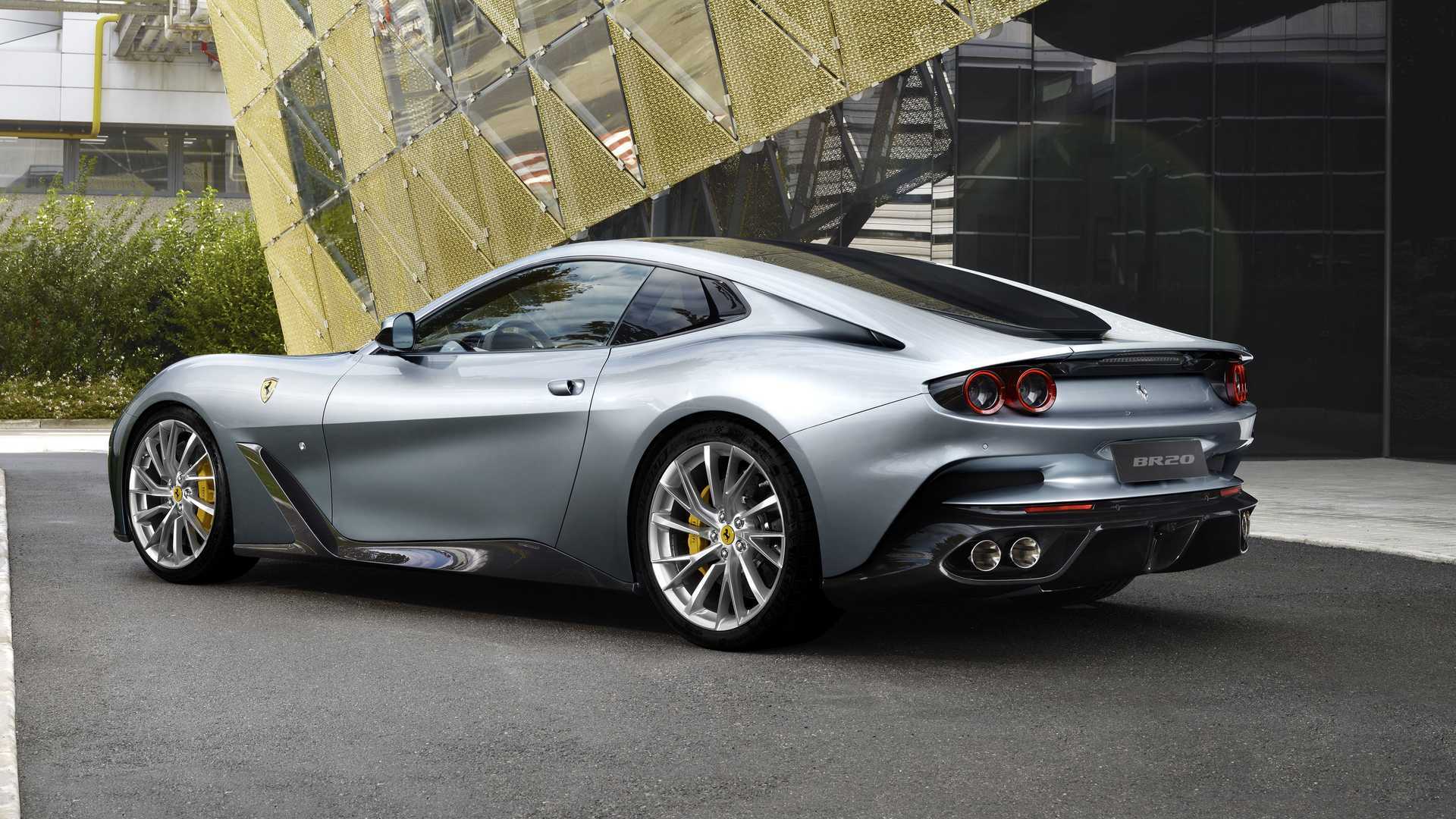
Ferrari’s range includes models that defined the brand and set standards for luxury sports cars worldwide. The Ferrari 250 GTO, created in the 1960s, reflects Ferrari’s racing heritage and design, combining strong performance with striking looks; it has become one of the most valuable collector cars in existence, with examples selling for over €50 million at auction. The Ferrari F40, introduced in 1987 to celebrate the company’s 40th anniversary, broke new ground with composite materials, a turbocharged engine, and a raw driving experience that brought the track to the road. The LaFerrari, unveiled in 2013, combined a hybrid V12 engine with 963 horsepower. In October 2024, Ferrari unveiled the F80, the LaFerrari’s successor and the most powerful road car ever to come out of Maranello, with a combined 1,200 horsepower from its twin-turbo V6 hybrid powertrain, derived from Ferrari’s Le Mans-winning 499P prototype.
The numbers: the company today
Today Ferrari is a major name in both the automotive and luxury sectors. Net revenues for 2024 reached €6.677 billion, up 11.8% on the prior year, with shipments totalling 13,752 units. The brand employs 5,435 people worldwide, with operations centred in Maranello, Italy. The United States remains the largest market, at 25% of shipments and 29% of revenues from cars and spare parts. Ferrari went public on the New York Stock Exchange in 2015 and has been listed on Euronext Milan since 2023, with a market capitalisation exceeding €80 billion. Production stays deliberately limited to preserve the exclusivity of each vehicle. Chairman John Elkann, grandson of the late Fiat patriarch Gianni Agnelli, oversees the company’s strategic direction alongside CEO Benedetto Vigna.
The legacy continues
Under CEO Benedetto Vigna, in the role since 2021, Ferrari is building new models while keeping its racing history central. The company returned to endurance racing with the 499P hypercar, winning the 24 Hours of Le Mans three years running in 2023, 2024, and 2025, the first hat-trick since Ferrari’s run from 1960 to 1965. That brings Ferrari’s Le Mans tally to 12 overall victories. In June 2024 the company opened its new “e-building” production facility, built to produce combustion, hybrid, and fully electric vehicles on the same lines. The Ferrari Elettrica, the brand’s first fully electric model, was revealed in October 2025 and begins customer deliveries in October 2026, with over 1,000 horsepower, four in-house developed electric motors, and a 122 kWh battery pack good for over 330 miles of range. Ferrari expects 60% of the lineup to be electric and hybrid models by 2026.
Why it matters
Ferrari is more than a maker of exotic cars. With 16 Formula One Constructors’ Championships and 15 Drivers’ Championships, plus 12 overall victories at Le Mans, it remains the most successful team in motorsport history. For buyers, owning a Ferrari means owning a piece of that racing record alongside the car itself.