Gucci: Guccio’s Leather Legacy
How it started
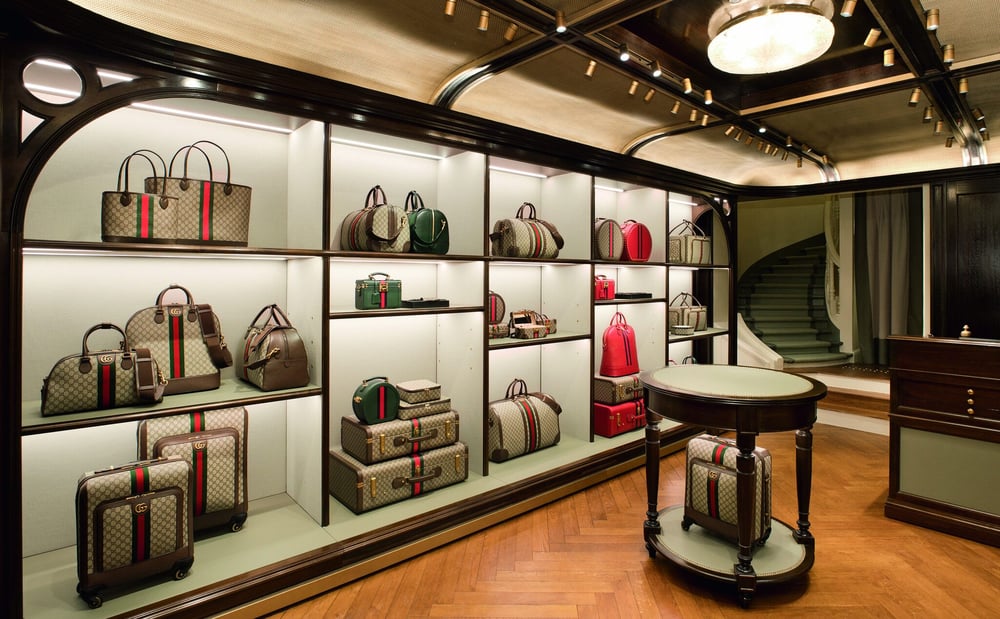
Florence, 1921. The city was still recovering from World War I. Guccio Gucci opened a shop that year with a simple idea: make bags and luggage of real quality. He had worked at the Savoy Hotel in London before this, watching wealthy guests arrive with extraordinary luggage. Back in Florence, he opened a small shop on Via della Vigna Nuova and began crafting handmade leather suitcases, bags, and saddles. The prices were high for the time. What his customers paid for was a standard of quality they could recognize on sight.
The years that followed were hard on Italy’s economy, but Guccio had an eye for real materials, solid construction and clean design. Wealthy Florentines began to notice the difference between an ordinary bag and a Gucci bag, and the brand gained credibility among travelers and nobility. By the 1930s he added silk scarves and knitwear, though leather stayed at the center of the business.
Who Guccio was
Guccio was a craftsman as much as a businessman. Born in 1881 to a leather worker in Florence, he grew up in a workshop and learned from the material itself: how to tell good leather from cheap, how it cuts, how it resists, how it ages. At the Savoy he had seen how wealthy people cared about perfect objects built to last. When he came home and started Gucci, the approach was plain: sell nothing but what it is genuinely worth. A Gucci product cost what it cost because of the skill and materials inside it.
During World War II, leather became scarce. Instead of lowering the quality of what he made, Guccio invented the bamboo-handled bag, pairing leather with a different material that worked. The bag became a signature piece, shaped by the shortage rather than hobbled by it. Quality came first, and that did not change. When Guccio died in 1953, he had turned a small Florence shop into a name recognized by anyone who valued real craftsmanship.
Expansion, and the mistakes that nearly ended it
In the 1950s, Gucci opened in Milan, then New York. The Gucci loafer arrived in 1953, with its horse-bit detail, understated enough that it stayed a fixture in shoe collections for decades. The 1960s brought the double-G monogram, a mark that signaled the brand without spelling it out.
In 1966, Gucci designer Vittorio Accornero created a scarf for the film “The Taming of the Shrew” with Elizabeth Taylor. Princess Grace of Monaco saw it and asked for the same design in different colors. A scarf made for a film became a lasting accessory, still owned by collectors today.
In the 1970s and 1980s, the trouble came from inside. Guccio’s sons fought over control. Quality dropped, prices rose, and the brand lost ground even as the name stayed famous. By the early 1990s, Gucci was in real crisis. Tom Ford arrived as Creative Director in 1994 and rebuilt the house without throwing out its history. The 1995 collection was contemporary but recognizably Gucci, and it reset the brand’s direction.
What defines the brand
A handful of products anchor Gucci’s identity. The 1953 loafer is still understated and largely unchanged. The Flora scarf, made for a film, outgrew its original purpose. The bamboo-handled bag came out of a wartime shortage. The Dionysus bag, introduced in 2015 with its tiger-head closure, pairs heritage details with a current design.
Gucci has dressed actors, musicians and aristocrats for decades, Audrey Hepburn and Jackie Kennedy among them, and still dresses contemporary figures. It tends to set trends rather than chase them. That comes less from marketing than from a long run of design decisions that held up.
The business today
Gucci is one of the world’s largest luxury brands. In 2022 it reported revenue of 9.73 billion euros. It runs more than 480 stores worldwide and employs about 17,000 people. Kering Group, a French luxury company, owns it, though the brand’s identity stays Italian.
The current Creative Director is Sabato De Sarno, who arrived in November 2022. He builds on the house’s history rather than erasing it, revisiting pieces like the bamboo bag and the loafer and finding where their original intent still applies.
Looking forward
Gucci is currently focused on sustainability and digital projects. Sourcing leather responsibly, even when it means waiting, follows the same logic Guccio used from the start: find another way rather than cut quality.
The brand is also exploring digital fashion and metaverse experiences. The format changes, but the underlying idea carries over: an object reflects choice and taste.
Why this matters
Gucci has lasted more than a century because its customers can tell the difference between a brand cutting corners and one that isn’t. The 1980s showed it could lose its way. It came back because the foundation Guccio built was real: an idea about how quality should work, still functioning more than a hundred years later.