Luxury Bhutan Hideaways: Amankora, Six Senses, COMO (2026)
Bhutan is the only country where luxury hospitality has been a national strategy from the start. The kingdom only opens to foreign visitors at premium price points and requires a daily Sustainable Development Fee that effectively filters volume. The result is a small luxury market dominated by three international brands and a few good local options. Choosing well matters more than in any other Asian destination because there is no second tier to fall back on.
The three brands that dominate luxury Bhutan
Amankora. Five lodges across the country (Paro, Thimphu, Punakha, Gangtey, Bumthang) operated as a single circuit since 2004. The original pioneer of luxury Bhutan, designed by Kerry Hill, defined the aesthetic of stone-walled lodges with timber interiors. The standard experience is a multi-lodge circuit of seven to ten nights, moving from valley to valley. Peak season rates per person per night start around 2,200 USD all-inclusive.
Six Senses Bhutan. Five lodges across Paro, Thimphu, Punakha, Gangtey and Bumthang. Opened 2018. More wellness-focused than Amankora with larger rooms, the most comprehensive spa facilities in the country, and a slightly more contemporary design language. Rates from approximately 1,450 USD per night per room.
COMO Uma. Two properties (Paro and Punakha). The most affordable entry into Bhutan luxury at approximately 600 to 900 USD per night. Smaller scale, focused on yoga and active travel rather than full-circuit immersion. Best for travelers who want a soft introduction or a shorter trip.
What a multi-lodge circuit actually costs
For seven nights spanning three Aman lodges, including the SDF (100 USD per person per night), transfers, guide and full board, expect approximately 25,000 to 35,000 USD per person in 2026. Six Senses on a similar circuit runs 18,000 to 26,000 USD per person. COMO Uma seven nights split between Paro and Punakha runs 6,000 to 9,000 USD per person inclusive of SDF.
The SDF is paid separately and was 200 USD per person per night until 2023 when Bhutan halved it to 100 USD to encourage tourism recovery. It funds education, healthcare and conservation. Visa fee is a one-time 40 USD per person.
When to go to Bhutan
March to May (spring) and September to November (autumn) are peak season. Clear views of Himalayan peaks, blooming rhododendrons in spring, harvest festivals in autumn. Daytime temperatures 15 to 25 degrees Celsius depending on altitude.
December to February is winter low season: clear days but cold nights at altitude, some lodges close, fewer flights into Paro. June to August is monsoon: green landscapes but unreliable weather, occasional flight delays.
Tiger’s Nest and the standard hike
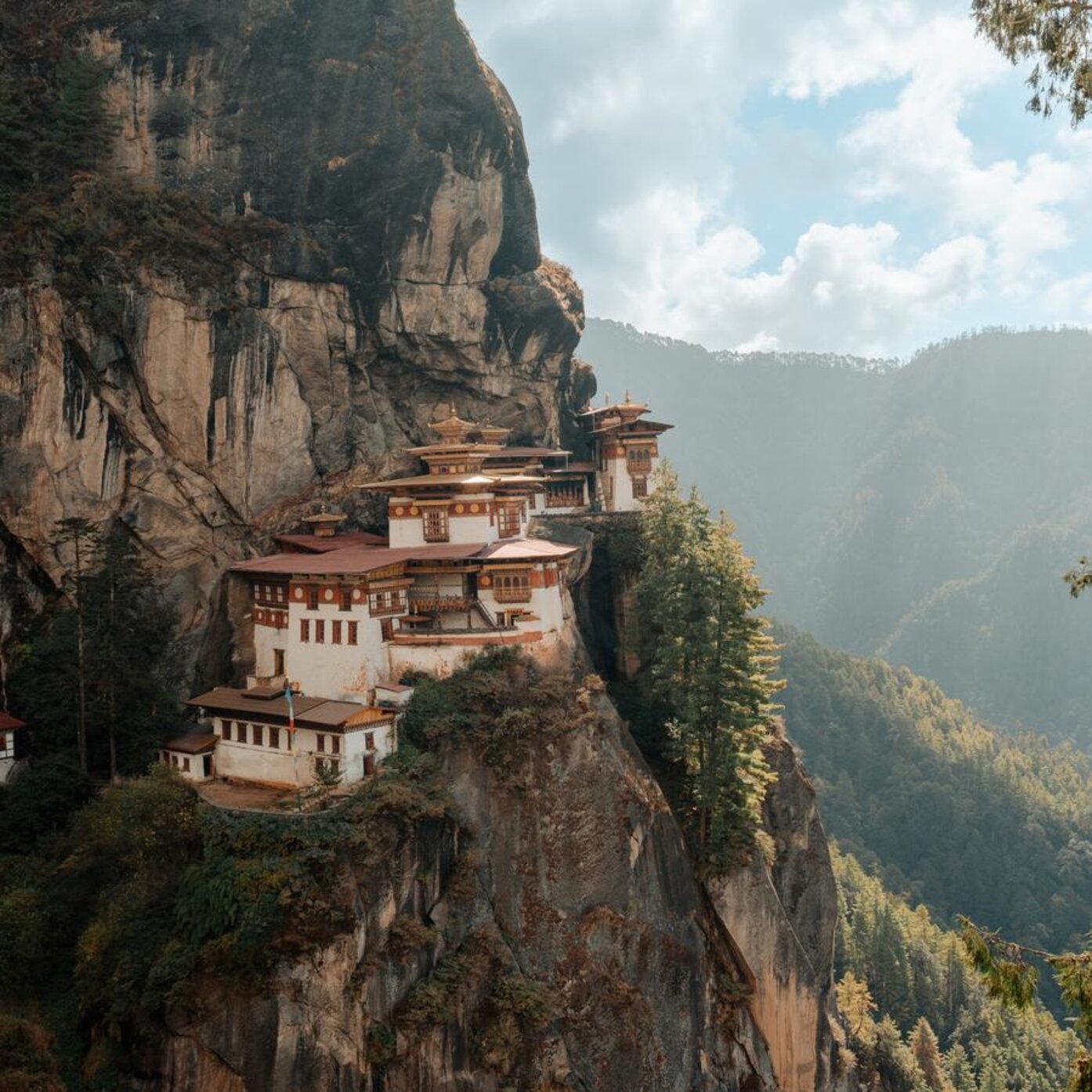
Paro Taktsang (Tiger’s Nest) is the icon. A 900-meter ascent on a switchback trail, four to six hours round trip. All three luxury brands include the hike with private guides. The standard itinerary places it on day three or four after acclimatization. Reasonable fitness required.
Featured operator
This space is reserved for a featured Bhutan travel specialist. If you book Aman, Six Senses or COMO circuits with private guides and want exposure to our HNW readers planning a 2026 trip, get in touch at [email protected].
Combining Bhutan with India or Nepal
Most travelers add an extension. The natural pairings are India (Delhi or Calcutta for direct connections to Paro via Bhutan Airlines or Drukair, plus a few days at the Taj Mahal or Rajasthan) or Nepal (Kathmandu connects, and the Himalayan landscape rounds out the trip). Allow at least three nights at each extension destination.
Frequently asked questions
Do I need a visa for Bhutan?
Yes, unless you are a citizen of India, Bangladesh or the Maldives. The visa is straightforward but must be initiated through a licensed Bhutanese tour operator or hotel. Fee: 40 USD one-time. The hotel handles the application as part of your booking.
What is the Sustainable Development Fee in 2026?
100 USD per person per night, paid separately from accommodation. Children under five exempt. Funds national education, healthcare and conservation programs.
Can I travel independently in Bhutan?
No. All international visitors must travel with a licensed Bhutanese guide and pre-arranged itinerary. The luxury hotels arrange this as part of their packages.
Which lodge brand is best for a first visit?
Amankora for travelers who want the deepest cultural immersion across multiple valleys. Six Senses for travelers who prioritize wellness and spa time. COMO Uma for a shorter or lower-budget introduction.
How fit do I need to be to hike Tiger’s Nest?
Reasonable fitness. The trail is 900 meters of altitude gain on switchbacks at 2,500 to 3,100 meters. Most healthy adults complete it in four to six hours round trip with breaks. Horseback ride is available to the halfway point. The final stairs cannot be skipped.
Is altitude sickness a concern?
Mild. Paro Valley is 2,200 meters, the highest lodges around 3,000 meters. Most travelers feel minor effects (mild headache, breathlessness on stairs) for the first 24 to 48 hours. Severe altitude sickness is uncommon below 3,500 meters.