Ermenegildo Zegna: A Century of Sartorial Elegance
The legend begins
Trivero sits in the Biellese Alps, up in Italy’s Piedmont. In 1910 it became the birthplace of what grew into one of the world’s leading luxury menswear brands. Ermenegildo Zegna, born in 1892, was the youngest of Angelo Zegna’s ten children. Angelo was a watchmaker who had taken up weaving wool on four looms. At 18, Ermenegildo founded the Lanificio Zegna & Giardino with two of his brothers and a partner, Costanzo Giardino Vitri. The wool mill opened with one stated ambition: to make “the most beautiful fabrics in the world.”
Ambition drove Ermenegildo from the start. He traveled to England again and again to import the latest machinery, and sourced raw materials from Australia, Mongolia, South Africa and Peru. By the late 1930s his fabrics had earned international acclaim and the company employed around a thousand workers. In 1938 he set up the Zegna Woollens Corporation in New York, becoming a pioneer in getting Italian fabrics to tailors abroad. The first Zegna logotype was registered in 1939.
The founder’s vision
Ermenegildo Zegna was never only an industrialist. Convinced that natural resources mattered, he launched a reforestation project in the mountains above Trivero as early as the 1930s, planting over 500,000 coniferous trees. He built the Panoramica Zegna, a scenic road linking Trivero to the resort of Bielmonte, and put money into hospitals, nursery schools and housing for his workers. Pairing industrial growth with social responsibility and environmental stewardship was an unusual thing to do in that era.
His work as both an entrepreneur and a philanthropist earned him the title of Cavaliere del Lavoro (Knight of Labour) in 1930, and later Count of Monte Rubello. The way he balanced industry and nature laid the groundwork for the Oasi Zegna, a 100 square kilometre natural territory in the Biellese Alps that still reflects the founder’s values today.
Rise to excellence
Turning a Piedmontese wool mill into a global luxury group took generations. In the 1940s, Ermenegildo’s sons Aldo and Angelo joined the firm, which was renamed Lanificio Ermenegildo Zegna e Figli. When the second generation took over in 1966, they opened a new chapter with Zegna’s first ready-to-wear collections. A new factory opened in Novara in 1968 to produce finished garments, pairing Zegna fabrics with Italian tailoring.
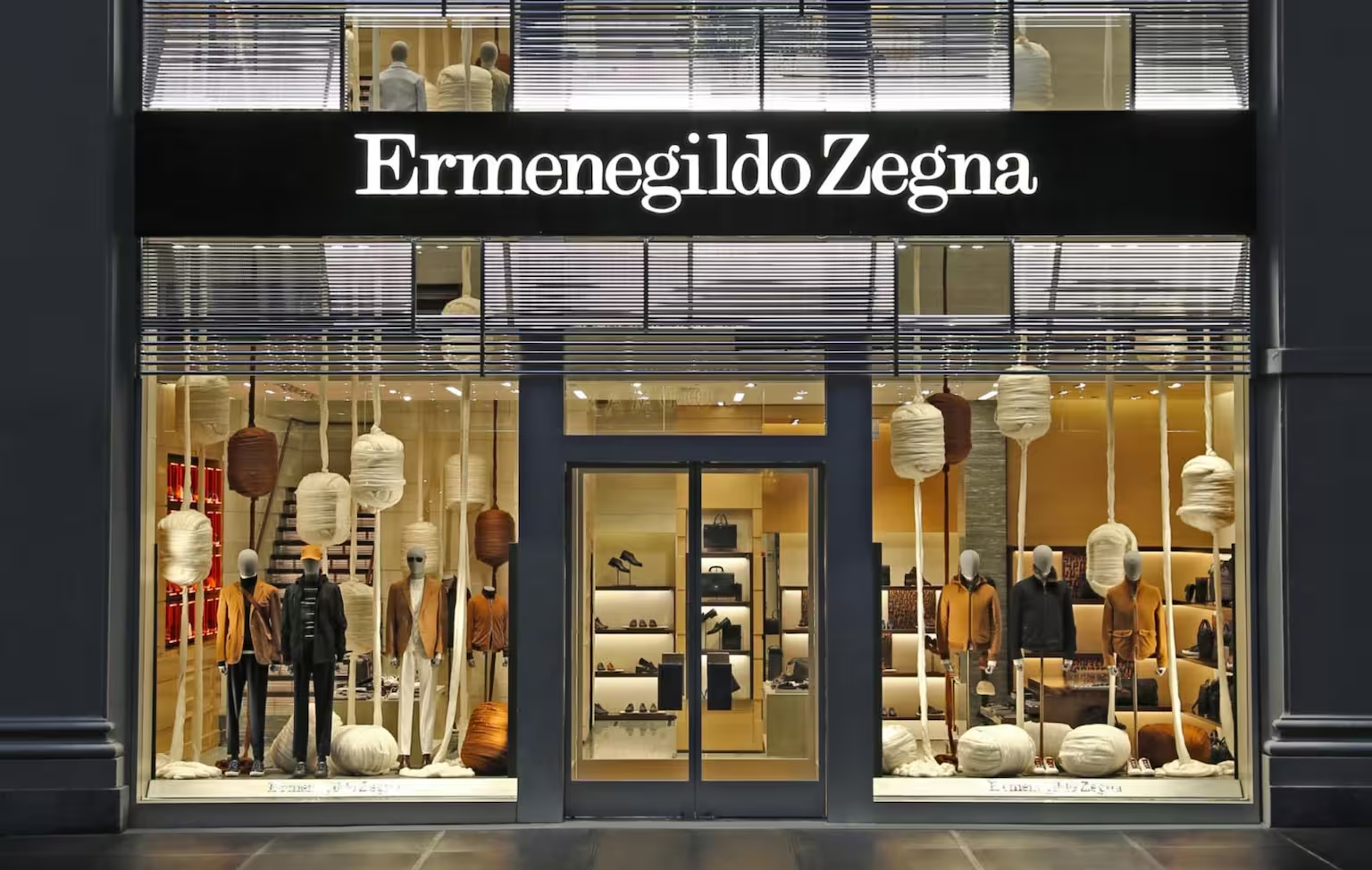
In 1963, the Ermenegildo Zegna Wool Trophy Awards were established in Australia to reward the best breeders of superfine Merino wool, followed by the Mohair Trophy for South Africa in 1970. The first Zegna monobrand boutique opened in Paris on Rue de la Paix in 1980, then Milan in 1985. In 1991, Zegna became the first luxury menswear brand to open a boutique in mainland China, in Beijing. That bet paid off in the decades that followed.
Iconic creations
Zegna’s history runs through its fabrics and innovations. The Trofeo collection, made from superfine Australian Merino wool, is known for softness, durability and refinement, and has stayed a cornerstone of the brand for decades. The Traveller collection brought performance-oriented suiting to the modern executive, while the Su Misura (made-to-measure) service raised personalized tailoring to a high level. In 2018 the brand introduced Technomerino, a high-performance washable wool, along with the Triple Stitch sneaker, which became a gateway product for younger buyers whose average age sits around 33.
In 2019, Artistic Director Alessandro Sartori unveiled the #USETHEEXISTING project, made entirely with innovative processes from pre-existing sources, a reflection of Zegna’s commitment to sustainability. The Oasi Lino and Oasi Cashmere collections have since carried that approach further, offering full traceability from seed to garment via QR code hang tags. Every creation follows Sartori’s idea of “uncomplicated, chic luxury,” blending traditional tailoring with sportswear.
The numbers: the group today
The Ermenegildo Zegna Group is now publicly traded, listed on the New York Stock Exchange since December 2021 under the ticker ZGN. In fiscal year 2024 it reported revenues of €1.95 billion and a profit of €90.9 million. The company employs more than 7,100 people worldwide across three brands: ZEGNA, the flagship menswear label, which alone generated €1.16 billion in revenues; Thom Browne, the New York-based modern tailoring brand acquired in 2018; and TOM FORD FASHION, whose business was acquired in 2023.
The ZEGNA brand counts 281 directly operated stores worldwide, with major markets in the Americas, EMEA, Greater China, Japan and South Korea. The Group controls its entire supply chain through the Filiera, a network of nine specialized Italian textile producers, with the original Lanificio in Trivero still at the center of fabric production. Zegna has set medium-term targets of €2.2 to €2.4 billion in revenues by 2027.
The legacy continues
Under Chairman and CEO Gildo Zegna, grandson of the founder and a third-generation family member who took the CEO role in 1997, the Group has gone through a significant transformation. Gildo, born in Turin in 1955 and educated at the University of London and Harvard Business School, led the public listing, the acquisitions of Thom Browne and Tom Ford Fashion, and the expansion into a multi-brand group. Through all of it, the family kept its controlling stake. He was awarded the title of Cavaliere del Lavoro in 2011, the same honour his grandfather received decades earlier.
Artistic Director Alessandro Sartori, who returned to Zegna in 2016 after a stint at Berluti, continues to shape the brand’s creative identity, blending heritage craftsmanship with contemporary ease. The company invests in sustainability through its Oasi Zegna nature preserve, where a tree is planted for every baby born into the company, and through traceable supply chain initiatives. The brand marks 115 years in 2025, now in its fourth generation of family ownership.
Why it matters
Zegna’s story runs from a small wool mill in the Biellese Alps to one of the world’s largest luxury menswear brands, built on craftsmanship, community investment and environmental responsibility across four generations of the same family.